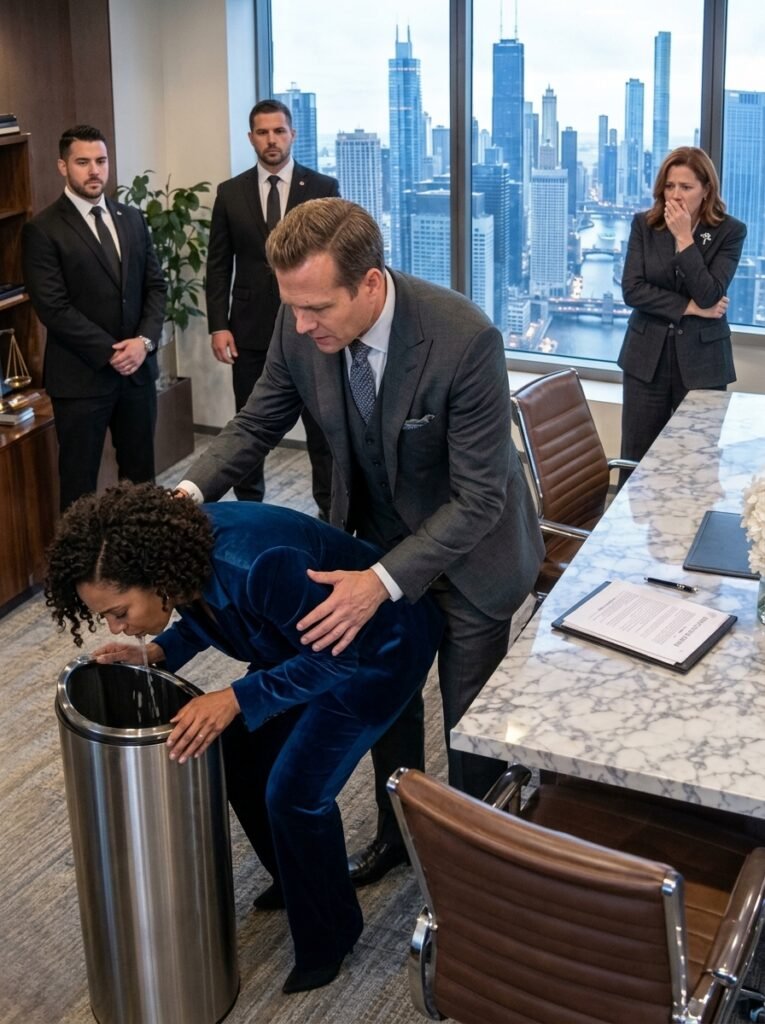
For several seconds, nobody moved.
The hospital room seemed to shrink around the glowing screen in my hand.
DON’T LET DORIAN TAKE YOU HOME.
THE BABY IS WHY I CAME BACK.
I read the words again.
Then again.
As if repetition might make them less impossible.
It didn’t.
Dorian stood across from me, his face unreadable except for the small muscle working in his jaw.
Dr. Mercer was the first person to speak.
“Who sent that?”
I looked up.
“Isabel.”
The name sounded unreal in my mouth.
Dorian’s younger sister had been dead for seven years.
I had attended memorial dinners for her.
I had watched Dorian go silent every October on the anniversary of the night she died.
There were no photographs of Isabel in the penthouse except one locked inside Dorian’s desk—a candid picture of a nineteen-year-old girl standing on a sailboat, dark hair whipping across her laughing face.
Dorian had once caught me looking at it.
He hadn’t been angry.
He had only taken the photograph from my hands and said, “She was the only person in my family who still believed people could choose to become better than what they were born into.”
Now that same woman was apparently standing outside my apartment.
Alive.
I turned the phone toward him.
His gaze dropped to the picture.
Something inside him changed.
It wasn’t the coldness I had seen when he gave orders.
It wasn’t anger.
It was shock stripped down to its most human form.
His hand came out.
“Give me the phone.”
“No.”
His eyes lifted to mine.
“Alina.”
“She told me not to let you take me home.”
“Which is exactly why I need the phone.”
“That sentence makes absolutely no sense.”
“It makes sense if someone is using my sister’s face to manipulate you.”
I looked at the photograph again.
The woman wore a charcoal coat, a wool hat, and dark glasses.
Her hair was longer than in the old photograph.
There were faint lines around her mouth that hadn’t existed seven years ago.
But the shape of her face—
The tilt of her head—
The tiny crescent-shaped scar near her left eyebrow—
I remembered that scar.
Dorian had told me she got it falling out of a tree when she was twelve because she refused to admit she couldn’t climb as high as he could.
“You think it’s fake?” I asked.
“I think anything is possible.”
“That is your answer for everything.”
“Because lately, everything has been possible.”
My fingers tightened around the phone.
“And what exactly was your plan before this message arrived?”
He didn’t answer quickly enough.
My heart sank.
“You were going to take me back to the penthouse.”
“Yes.”
“Even though someone apparently got access to my medical care through people connected to you.”
His expression tightened.
“The penthouse is the most secure place in the city.”
“The penthouse is where I spent six months being ignored by my husband.”
The words landed harder than I intended.
Dorian went still.
I almost wished I could pull them back.
Almost.
But pain didn’t become less true because saying it hurt someone else.
Dr. Mercer cleared her throat softly.
“I’m going to recommend that Mrs. Cross remain here for observation for a few hours.”
Dorian looked at her.
“Why?”
“Because she’s dehydrated, exhausted, newly aware that she’s pregnant, and currently standing in the middle of a family situation I’m going to assume is complicated.”
“That is a generous word for it,” I muttered.
Dr. Mercer’s mouth almost smiled.
“She needs fluids, food, and rest. Stress isn’t automatically dangerous, but none of this is helping.”
Dorian’s gaze returned to me.
Something about the way he looked at me changed when Dr. Mercer said the word pregnant.
Not possession.
Not strategy.
Wonder.
Fear.
Maybe both.
“I’m staying,” he said.
I shook my head.
“No.”
His eyebrows lifted.
“I don’t want you making decisions for me.”
“I said I’m staying. I didn’t say you had to talk to me.”
“That might be the first reasonable thing you’ve said today.”
Noah appeared quietly in the doorway.
He looked at Dorian.
“We have a problem.”
Dorian’s face hardened.
“Another one?”
“The photograph is real.”
Every sound disappeared.
Noah stepped into the room and held out a tablet.
“Our street cameras caught her too. Same coat. Same woman. She arrived outside Mrs. Cross’s building at eight seventeen this morning.”
My throat tightened.
“Where did she go?”
“That’s the problem.”
Noah looked at Dorian.
“She got into a cab three minutes later.”
“So find the cab,” Dorian said.
“We did.”
“And?”
“It drove four blocks.”
Noah hesitated.
“The driver says she asked to be dropped at St. Matthew’s.”
I knew the name.
Everyone in Chicago knew the name.
St. Matthew’s Church was old, quiet, and tucked between towers that had risen long after its stone walls.
Dorian knew it too.
His face lost color.
I looked between them.
“What?”
Noah didn’t answer.
Dorian did.
“That was Isabel’s church.”
My pulse stumbled.
“The one she used to go to?”
“Yes.”
“She was religious?”
“No.”
The grief in his voice was so quiet I almost missed it.
“She liked the courtyard.”
Before I could ask more, my phone buzzed again.
Another message.
COME ALONE.
ST. MATTHEW’S.
4 P.M.
Then a third.
IF HE FOLLOWS YOU, I LEAVE.
Dorian read the messages over my shoulder.
“No.”
I laughed once.
There was no humor in it.
“You don’t get a vote.”
“I absolutely get a vote when someone claiming to be my dead sister asks my pregnant wife to walk into an unknown location alone.”
“Almost ex-wife.”
His eyes sharpened.
“Stop saying that.”
The emotion in his voice startled both of us.
I stared at him.
“What?”
He looked away.
But only for a moment.
Then he crossed the room, stopped several feet from me, and lowered his voice.
“I filed those papers because I believed making you hate me would make you safer.”
“You succeeded at the first part.”
Pain flashed across his face.
“I know.”
“No, Dorian. I don’t think you do.”
Dr. Mercer and Noah became very interested in the far side of the room.
I didn’t care.
Six months of silence had been waiting for somewhere to go.
“You don’t get to say you were protecting me like that magically makes it noble. You stopped coming home. You stopped telling me anything. You made me think our marriage had become an inconvenience you were tired of carrying.”
His shoulders stiffened.
“I was trying to distance you from me.”
“You did.”
“I know.”
“You made me leave the house where we were supposed to build a life together.”
“I know.”
“You let me sign a lease on a tiny apartment across town because I thought you didn’t want me anymore.”
His eyes lowered.
“I know.”
“And then you sent divorce papers.”
“I know.”
My voice broke.
“Stop saying that.”
Dorian looked at me again.
For the first time that morning, the terrifyingly controlled Dorian Cross disappeared.
What remained was simply the man I had once found asleep at our kitchen table because he had stayed awake all night waiting for me to return from visiting my aunt.
“I didn’t know how to keep you and keep you safe,” he said.
“That was not your decision to make alone.”
“No.”
The answer came quietly.
“No, it wasn’t.”
I had expected an argument.
I had prepared for one.
That simple admission took the anger out from under me so quickly I almost lost my balance.
He noticed.
Of course he did.
He moved forward.
Then stopped himself before touching me.
The hesitation hurt more than if he had crossed the distance.
“I was wrong,” he said.
Dorian Cross did not say those words often.
Maybe ever.
“I thought love meant keeping danger away from you, even if I had to become the thing you hated to do it.”
His voice roughened.
“I never considered that I had turned myself into the danger.”
The room went quiet.
I looked at him for a long time.
Then down at my hands.
My wedding ring was still there.
I had meant to remove it after signing the divorce papers.
I hadn’t gotten that far.
Nine weeks pregnant.
A forged medical report.
A vanished doctor.
A dead sister who apparently wasn’t dead.
And somehow the most frightening thing in the room was still hope.
Because hope had always been the one thing Dorian could break that I didn’t know how to replace.
“I’m going to St. Matthew’s,” I said.
His expression closed instantly.
“No.”
I pointed at him.
“You were doing well for almost thirty seconds.”
“Alina—”
“I need answers.”
“So do I.”
“She asked for me.”
“She used your pregnancy to get your attention.”
“Which means she knows something.”
“Or she wants us to think she does.”
I held up my phone.
“Then tell me what you suggest.”
He stared at the messages.
I watched his instincts fight with everything he had just admitted.
Finally, slowly, he exhaled.
“You go.”
Noah turned toward him.
“Dorian.”
Dorian lifted a hand.
Noah stopped.
“You go,” Dorian repeated. “And I don’t follow you inside.”
I narrowed my eyes.
“That sounds suspiciously incomplete.”
“It is.”
Despite everything, I nearly smiled.
He continued.
“Noah monitors the exterior from three blocks away. No weapons inside the church. No confrontation unless you ask for help.”
“I said alone.”
“You will be alone.”
“That is not the same as being unwatched.”
“No.”
His voice softened.
“But it’s the compromise I can live with.”
I folded my arms.
“And if I say no?”
His gaze dropped toward my stomach for one brief second.
Then back to my face.
“I will hate it.”
He paused.
“But I’ll respect it.”
Something inside my chest shifted.
Not healed.
Not forgiven.
But shifted.
Dr. Mercer returned to my side.
“Before anyone goes anywhere, my patient gets two bags of fluids and something bland to eat.”
Dorian nodded immediately.
I sighed.
“You two are going to become unbearable, aren’t you?”
Dr. Mercer smiled.
“I already am.”
For the first time that morning, I laughed.
It was small.
Shaky.
But real.
Dorian looked at me as though the sound had broken something open inside him.
Then my phone buzzed one more time.
This message was different.
No words.
Just a photograph.
A wooden jewelry box sitting on a stone bench.
I recognized it immediately.
Dorian did too.
His breath stopped.
It had belonged to his mother.
And according to Dorian, it had been buried with Isabel seven years ago.
—
At three fifty-two that afternoon, I stood across the street from St. Matthew’s Church.
Chicago wind curled around the buildings, sharp enough to sting my cheeks.
The church looked almost unreal among the glass towers—a small gray-stone sanctuary with narrow windows and a copper roof turned green with age.
I wore the same cream coat from that morning.
Dorian had tried to convince me to change into something warmer.
I had refused because accepting clothing from the penthouse somehow felt like crossing a line I wasn’t ready to cross.
So he gave me his scarf instead.
I had not meant to accept that either.
Yet there it was.
Dark gray wool wrapped around my neck.
It smelled faintly like cedar and his cologne.
I hated how familiar it felt.
Noah’s car was somewhere behind me.
I couldn’t see it.
That was the agreement.
Dorian was at the hospital.
That was also the agreement.
I wasn’t entirely convinced he would honor it.
But when I looked through the church doors, I saw only candles, polished wooden pews, and an elderly man arranging hymnals.
No Dorian.
I stepped inside.
Warmth settled around me.
The air smelled faintly of beeswax and old wood.
Sunlight filtered through stained glass, scattering red and blue patterns across the stone floor.
My phone buzzed.
COURTYARD.
I followed a narrow hallway past the sanctuary and found a wooden door.
Beyond it was a small enclosed garden.
Bare trees stretched toward the winter sky.
A fountain stood silent in the center.
Stone benches lined the walls.
And on the far side of the courtyard sat a woman in a charcoal coat.
She did not turn around.
My footsteps echoed.
“I thought you might not come,” she said.
My entire body went cold.
The voice.
I had heard it only on old family videos.
Christmases before I met Dorian.
Birthday dinners.
A grainy recording of Isabel teasing Dorian about his haircut.
But it was the same voice.
Older.
Softer.
Alive.
“Isabel?”
She turned.
Dark eyes met mine.
Dorian’s eyes.
Not similar.
Not almost.
The same.
She removed her sunglasses.
A thin crescent scar marked her left eyebrow.
“You look exactly like he said you would.”
My heart pounded.
“Dorian?”
She gave a sad little smile.
“He talked about you before you ever knew my name.”
I stared at her.
“You’ve seen him?”
“Not in seven years.”
“That doesn’t answer my question.”
“No.”
Her smile vanished.
“No, it doesn’t.”
I stayed near the doorway.
She noticed.
“You should keep your distance.”
“Why?”
“Because you don’t know me.”
“That may be the first sensible thing anyone in your family has said to me today.”
A flicker of amusement crossed her face.
For one impossible second, I saw Dorian in it.
Not the businessman.
The man who used to burn pancakes.
Isabel nodded toward the opposite bench.
“You can sit there.”
I didn’t move.
“Tell me why you’re alive.”
Her face tightened.
“Straight to the easy questions.”
“I’ve had a difficult morning.”
“I know.”
My fear sharpened.
“How?”
“I’ve been watching you.”
The courtyard seemed colder.
“For how long?”
“Eleven days.”
My hand drifted toward my phone.
Isabel noticed.
“If I wanted to hurt you, I would not have asked you to meet in a church with two security cameras at the entrance and one of your husband’s men pretending to read a newspaper across the street.”
I blinked.
“Noah?”
“Bad actor.”
Despite myself, I almost laughed.
Then I remembered who she was.
“Why have you been watching me?”
“Because Adrian disappeared.”
“You know him?”
“I know what he did.”
Her fingers tightened around something on her lap.
The wooden jewelry box.
Dorian’s mother’s box.
“You sent the ultrasound.”
“Yes.”
“It had your name.”
“Yes.”
“You were pregnant six months ago?”
Her eyes lowered.
The answer came quietly.
“Yes.”
My chest tightened.
“Where is your baby?”
Isabel closed her eyes.
For the first time, her composure cracked.
Not dramatically.
Just enough for me to see the grief beneath it.
“My son is alive.”
I let out the breath I hadn’t realized I was holding.
“Where is he?”
“Safe.”
“With whom?”
“People I trust.”
“Does Dorian know he has a nephew?”
“No.”
“Why?”
Her gaze rose sharply.
“Because knowing about my son would put him in the same danger you’re in now.”
I sat down.
Not because I trusted her.
Because my knees suddenly didn’t.
“Start at the beginning.”
Isabel looked toward the bare branches overhead.
“The beginning is complicated.”
“I have time.”
“You’re pregnant, exhausted, and supposed to be resting.”
“So apparently everyone knows my medical instructions now.”
Her mouth twitched.
Then the sadness returned.
“My family was never what Dorian told you.”
“That statement covers a lot of possibilities.”
“He probably told you our father was ruthless.”
“Yes.”
“He probably told you our mother died when we were teenagers.”
“Yes.”
“And he probably told you I died seven years ago in a boating accident.”
“He didn’t give details.”
“Because he wasn’t there.”
I frowned.
“He told me he identified you.”
“No.”
Her answer was immediate.
“He identified my necklace.”
The courtyard seemed to tilt.
“What?”
“The boat burned before it sank. A body was recovered days later.”
She looked down at the box.
“They told him dental records confirmed it was me.”
My stomach tightened.
“Were they forged?”
“Yes.”
“By Adrian?”
“Partly.”
“Why?”
“Because I paid him.”
I stared at her.
“You faked your own death?”
“Yes.”
The word hung between us.
Seven years of grief reduced to one terrible choice.
“Dorian mourned you.”
“I know.”
“He still mourns you.”
“I know.”
“You let him.”
Her face changed.
That one hurt.
Good.
Maybe I wanted it to.
“You don’t get to say you loved him and then explain that away.”
“I’m not going to.”
Her eyes shone, but she didn’t look away.
“I did something unforgivable because at twenty-four, I believed disappearing was the only way to keep him alive.”
The words hit too close to home.
I thought of Dorian in the hospital.
I thought of six months of cold dinners and unanswered questions.
“You people really have a family problem with making decisions for the people you love.”
Isabel gave a broken laugh.
“Yes.”
For a moment, neither of us spoke.
Then she said, “Our father wanted Dorian to inherit everything.”
“I know about the trust.”
“You know the version written on paper.”
“What version is that?”
“That the first biological child born inside Dorian’s marriage receives controlling rights.”
“Yes.”
“That wasn’t the original trust.”
I leaned forward.
“What was?”
Isabel opened the jewelry box.
Inside were old papers wrapped in blue ribbon.
“The original trust divided control between Dorian and me.”
My pulse quickened.
“Half each?”
“Forty-five percent each. Ten percent held by our mother until her death, then divided between us.”
“What changed?”
“Our father.”
“He amended it?”
“He tried.”
She handed me a yellowed photocopy.
I didn’t understand most of the legal language.
But I recognized names.
Dorian Cross.
Isabel Cross.
And beneath them, another name.
Evelyn Cross.
Their mother.
“She signed this?” I asked.
“No.”
“Then why is her name—”
“Because the signature was forged.”
I looked up.
Isabel nodded.
“The trust everyone knows today was built on a forged amendment.”
I stared at the papers.
“Why would your father do that?”
“Because he could control Dorian through duty.”
Her voice hardened.
“Dorian was twenty-one when our mother died. He believed he had to protect me, protect the businesses, protect every employee, every cousin, every person connected to the Cross name.”
“That sounds like him.”
“It was useful to our father.”
She looked at me.
“Dorian thinks power is something he inherited. It isn’t. Responsibility is what he inherited. Other people simply convinced him the two were the same thing.”
A knot formed in my throat.
Because that also sounded like him.
The way he had carried every problem alone.
The way he never asked for help.
The way he treated love like a vulnerability that needed security guards.
“Where does your baby fit into this?” I asked.
Isabel’s expression changed.
“The original trust had another clause.”
She removed another document.
“If either sibling died without formally transferring their voting rights, those rights passed temporarily to the surviving sibling.”
I understood.
“If you were dead…”
“Dorian controlled almost everything.”
“And if you were alive?”
“I could challenge that control.”
“Then why would anyone want me pregnant?”
She held my gaze.
“Because of what happens next.”
I waited.
“If Dorian has a biological child within a legally valid marriage, the forged amendment becomes much harder to challenge without exposing the entire trust structure.”
“I don’t understand.”
“It creates a new beneficiary.”
“The baby.”
“Yes.”
“So someone gave me fertility medication hoping I would get pregnant?”
“Possibly.”
“That doesn’t make sense. Pregnancy isn’t guaranteed.”
“No.”
Her eyes narrowed.
“That’s why I don’t think the medication was the entire plan.”
A chill moved through me.
“What does that mean?”
“I don’t know.”
“You said the baby is why you came back.”
“It is.”
“Then tell me what you do know.”
Isabel stood and walked toward the fountain.
For several seconds, she said nothing.
Then she turned.
“Three weeks ago, someone contacted me through an account no one in Chicago should know exists.”
“Who?”
“I don’t know.”
“What did they say?”
Her voice dropped.
“They sent me a photograph of my son.”
My breath caught.
“He was safe?”
“Yes. The photo had been taken from a distance. School playground.”
Fear crossed her face.
Real fear.
“They knew where he was.”
“What did they want?”
“They told me Dorian’s wife was pregnant.”
My hands went cold.
“Three weeks ago?”
“Yes.”
“I didn’t know three weeks ago.”
“I know.”
“Dorian didn’t know.”
“I know.”
“Then how did they?”
“That is the question that brought me back.”
I stood.
“The medication.”
“Maybe.”
“No. Someone didn’t just hope. They knew.”
Isabel nodded.
“And that means whoever arranged this was watching you closely enough to know before you did.”
My hand moved instinctively to my stomach.
A protective gesture.
Small.
Automatic.
Isabel saw it.
Her face softened.
“I’m sorry.”
“For what?”
“That this happened around you.”
“Were you involved?”
“No.”
“Adrian was.”
“Yes.”
“And you paid Adrian to fake your death.”
“Seven years ago.”
“Then he worked for Dorian.”
“Yes.”
“And now he’s gone.”
“Yes.”
I looked at her.
“That is a lot of coincidence.”
“It isn’t coincidence.”
“Then what is it?”
She stepped closer.
“Someone is cleaning up an old secret.”
Before I could ask which secret, the courtyard door opened.
I spun around.
Dorian stood in the doorway.
My heart sank.
Isabel went white.
“You followed me.”
He wasn’t looking at me.
He was looking at his sister.
For all the times I had seen Dorian angry, dangerous, cold, or commanding, I had never seen him unable to move.
“Isabel.”
Her name barely came out.
She stood frozen beside the fountain.
Dorian took one step into the courtyard.
Then another.
Isabel backed away.
“Don’t.”
He stopped instantly.
That was what broke me.
Not yelling.
Not accusations.
The obedience.
His sister said don’t, and Dorian Cross—the man half the city seemed afraid to disappoint—stopped as if the single word had struck him.
Seven years.
Seven years of grief stood between them.
“You’re alive,” he whispered.
Isabel’s lips trembled.
“Yes.”
He laughed once.
The sound was shattered.
“You’re alive.”
“I’m sorry.”
“No.”
He shook his head.
“No, don’t do that yet.”
Isabel blinked rapidly.
“Dorian—”
“Let me look at you.”
She went silent.
He stared at her face.
At the scar above her eyebrow.
At her hands.
At the slight crooked bend in her left little finger.
“You broke that when you were thirteen,” he said.
Isabel looked down.
“You pushed me off the dock.”
“You pushed me first.”
“You deserved it.”
Dorian made a sound halfway between a laugh and a sob.
Then his face crumpled.
Only for a second.
But I saw it.
So did she.
Isabel crossed the courtyard.
Dorian did not move.
She stopped in front of him.
“I thought if I disappeared, Father would stop using me against you.”
His eyes closed.
“He was already dead.”
“His people weren’t.”
“You could have called.”
“I was scared.”
“For seven years?”
“Yes.”
His eyes opened.
“You let me bury you.”
“I know.”
“I stood beside an empty grave every year.”
“I know.”
“I blamed myself.”
“I know.”
His voice broke.
“No, you don’t.”
Isabel flinched.
I had never heard Dorian sound like that.
“I changed the route that night,” he said. “The boat was supposed to leave from Belmont Harbor. I told them to use Navy Pier instead because I thought the roads would be safer. For seven years, I thought changing that route killed you.”
Isabel’s hand covered her mouth.
“I didn’t know.”
“You never asked.”
“I couldn’t.”
“You chose not to.”
“Yes.”
The truth stood between them.
Ugly.
Necessary.
Isabel lowered her hand.
“I was wrong.”
Dorian stared at her.
“So was I.”
She frowned.
He looked toward me.
“I spent six months making the same mistake.”
The anger in his face changed into something quieter.
“Thinking fear gave me the right to decide what everyone else could survive.”
Isabel followed his gaze to me.
Then she looked back at her brother.
“You told her?”
“Not enough.”
“Does she know about Father?”
“Enough.”
“About Mother?”
Dorian frowned.
“What about Mother?”
Isabel froze.
The smallest mistake.
But everyone felt it.
Dorian stepped forward.
“What about Mother?”
Isabel looked at me.
Then back at him.
“That isn’t why I asked Alina here.”
Dorian’s voice changed.
“Isabel.”
She looked away.
He stared at her.
“What don’t I know?”
I stepped between them before the moment hardened.
“Not like this.”
Dorian’s jaw tightened.
I held his gaze.
“You said you would respect my choices.”
His nostrils flared.
“Yes.”
“I came here for answers.”
“And she’s avoiding them.”
“So were you six hours ago.”
That stopped him.
Isabel looked at me with something like gratitude.
I ignored it.
“This is what your family does,” I said. “One person gets scared. Then they hide something. Then someone else gets hurt. Then that person hides something bigger. Do either of you see a pattern?”
Neither spoke.
“Good.”
I pointed toward the benches.
“Sit down.”
Dorian stared at me.
I raised an eyebrow.
To my surprise, he sat.
Isabel hesitated.
Then sat opposite him.
I remained standing.
Dorian looked up at me.
“Are you enjoying this?”
“More than I should.”
A faint smile touched his mouth.
Then disappeared.
I turned to Isabel.
“Why did you tell me not to let him take me home?”
Her expression grew serious again.
“Because someone has access to the penthouse.”
Dorian’s body went still.
“Impossible.”
“That was my reaction too.”
“Who?”
“I don’t know.”
“How do you know?”
“Because three nights ago, someone sent me a photograph taken inside your bedroom.”
Silence.
I felt my stomach drop.
“What photograph?”
Isabel opened her phone.
She hesitated before turning the screen toward us.
The image showed the bedroom Dorian and I had once shared.
The lights were off.
Moonlight cut across the bed.
On my old nightstand sat a small white envelope.
Dorian took the phone.
“When?”
“Three seventeen in the morning.”
His face hardened.
“Noah reviewed the security logs every night.”
“Then the person is either better than Noah or someone Noah has been trained not to question.”
Dorian zoomed in on the image.
My eyes went to the envelope.
“What’s inside it?”
“I don’t know.”
“It’s still there?”
Isabel nodded.
Dorian immediately reached for his phone.
I stopped him.
“Wait.”
He looked at me.
“If someone wants you to find it, maybe calling twenty armed men and sealing the building is exactly what they expect.”
His eyes narrowed.
“You’ve been married to me too long.”
“Three years.”
“Long enough.”
Isabel watched us.
Something unreadable moved across her face.
“You love each other.”
Neither of us answered.
She tilted her head.
“That wasn’t a question.”
Dorian looked at me.
I looked away first.
“Love isn’t the problem,” I said.
“No,” Isabel said softly. “Fear usually is.”
The wind stirred the bare branches overhead.
For a moment, the three of us sat in the old courtyard beneath a pale Chicago sky, connected by things we had lost, things we had hidden, and one tiny heartbeat none of us had heard yet.
My baby.
Our baby.
I looked at Dorian.
“Did you mean what you said at the hospital?”
“Which part?”
“That the divorce was a mistake.”
His gaze held mine.
“I meant that filing without telling you the truth was wrong.”
“That wasn’t what I asked.”
He understood.
Dorian looked at the wedding ring on my hand.
Then at me.
“I don’t want a divorce.”
The honesty of it landed softly.
No command.
No strategy.
No expectation.
Just truth.
“I haven’t wanted one for a single second.”
I swallowed.
“Then why sign the papers?”
“Because I convinced myself losing you was acceptable if you were alive somewhere to hate me.”
My throat tightened.
“That is an incredibly dramatic thing to say.”
“I’m aware.”
“It’s also stupid.”
“Yes.”
“You’re agreeing with me too much today.”
“I’m trying something new.”
Isabel laughed quietly.
Dorian looked at her.
For a second, brother and sister simply stared at each other.
Then Dorian’s mouth almost smiled.
It faded quickly.
But not completely.
I sat beside him.
Not touching.
Just beside.
“I’m not going back to the penthouse tonight,” I said.
His expression tightened.
But he nodded.
“I know.”
“I’m not moving back in because I’m pregnant.”
“I know.”
“I’m not pretending the last six months didn’t happen.”
“I wouldn’t ask you to.”
“And I’m not signing the divorce papers today.”
Dorian stopped breathing.
I looked down at my hands.
“That is not forgiveness.”
“I know.”
“It’s time.”
He nodded once.
“I’ll take time.”
“And honesty.”
“Yes.”
“All of it.”
Something moved in his face.
A warning.
A secret.
I caught it instantly.
“Dorian.”
He looked at me.
“All of it,” I repeated.
He inhaled slowly.
Then nodded.
“All of it.”
I believed that he wanted to mean it.
For now, that was enough.
I turned toward Isabel.
“You too.”
Her eyebrows rose.
“Me?”
“You came back because of my baby. You don’t get to vanish again without telling us what you know.”
Fear flickered across her face.
But she nodded.
“Okay.”
Dorian looked at her sharply.
“Okay?”
“Yes.”
“You’re staying?”
“I didn’t say that.”
His expression hardened.
She sighed.
“I said I won’t disappear without telling you.”
“That is a very low standard.”
“Your standards are exhausting.”
“You faked your death.”
“You married a woman without telling her half your life.”
“I am working on that.”
“Both of you,” I said.
They stopped.
For one strange second, I could see them as children.
Dorian, older, serious, convinced everything was his responsibility.
Isabel, stubborn enough to fight him simply because he expected obedience.
A family before grief rearranged them.
A family underneath everything.
I suddenly understood something.
The most dangerous inheritance in the Cross family had never been money.
It was silence.
And maybe silence was the one thing we could choose not to inherit.
—
We left St. Matthew’s separately.
Isabel refused to tell Dorian where she was staying.
Dorian argued for exactly four minutes.
Then he remembered he was supposedly trying something new.
He stopped.
I was impressed.
Noah drove me back to the hospital.
Dorian sat beside me this time.
Not opposite.
He didn’t touch me.
Neither of us mentioned it.
Halfway there, my stomach growled loudly.
Dorian looked at me.
I looked out the window.
“No.”
“I didn’t say anything.”
“You were about to.”
“You need to eat.”
“I had crackers.”
“Four.”
I turned.
“How do you know how many crackers I ate?”
“You left the wrappers.”
“That is disturbing.”
“It is basic observation.”
“It is surveillance disguised as marriage.”
His mouth twitched.
“Five years and you’ve finally figured me out.”
I laughed before I could stop myself.
The sound filled the car.
Noah glanced at us through the mirror.
Then quickly looked away.
Dorian’s expression softened.
I knew that look.
He remembered this too.
The easy version of us.
The one that had existed before everything became strategy.
My laughter faded.
His did too.
But this time the silence wasn’t empty.
It was cautious.
New.
At the hospital, Dr. Mercer gave me another examination and pronounced me medically stable enough to leave.
“Small meals,” she said. “Hydration. Prenatal vitamins. Less stress.”
I stared at her.
She sighed.
“Fine. Reasonable stress.”
“Thank you.”
“And I want you back in three days.”
Dorian immediately opened his calendar.
I pointed at him.
“That appointment belongs to me.”
His thumb stopped above the screen.
Then, deliberately, he put the phone away.
“Tell me when it is.”
Dr. Mercer gave him an approving nod.
I narrowed my eyes.
“Don’t encourage him.”
Before we left, she handed me a printed ultrasound appointment card.
My first scan.
The word made everything suddenly real again.
I slipped the card into my purse.
Dorian saw it.
He said nothing.
In the elevator, I asked, “Do you want to come?”
He looked at me.
“To the ultrasound.”
Something opened in his face.
“Yes.”
Just one word.
No hesitation.
No command.
I nodded.
“Okay.”
His hand shifted at his side.
For a second, I thought he might reach for mine.
He didn’t.
This time, I did.
Only for a moment.
My fingers touched his.
Dorian looked down.
Then up at me.
I pulled away before the elevator doors opened.
It wasn’t reconciliation.
But it was the first thing we had done together in months that wasn’t based on fear.
—
We did not go to the penthouse.
Instead, Dorian arranged for me to stay in a quiet suite at a small hotel owned by a family friend on the Gold Coast.
Two guards stayed downstairs.
One stayed near the service entrance.
Nobody stood outside my door.
That had been my condition.
Dorian accepted it.
That surprised me more than it should have.
Isabel promised to call by ten.
At nine forty-seven, she did.
“I’m safe,” she said.
Dorian, seated across the hotel living room from me, leaned toward the speakerphone.
“Where?”
“No.”
“Isabel.”
“Goodnight, Dorian.”
“Wait.”
She paused.
For a second, all his questions disappeared.
His voice softened.
“Can I call you tomorrow?”
Silence.
Then:
“Yes.”
Dorian closed his eyes.
“Okay.”
Another silence.
“Goodnight, Izzy.”
Her breath caught through the phone.
Nobody had called her that all day.
“Goodnight, Dor.”
The line went dead.
Dorian stared at the phone.
I pretended not to see the tears in his eyes.
He pretended not to wipe them away.
Some kindnesses were easier when nobody named them.
Later, room service arrived.
Soup for me.
Steak for Dorian.
He ate three bites.
I ate almost all the soup.
That alone seemed to improve his mood.
“You look pleased with yourself,” I said.
“You ate.”
“I am pregnant, not recovering from a wilderness expedition.”
“You nearly fainted into a divorce attorney this morning.”
“I did not faint.”
“You aimed for it.”
“I was overwhelmed.”
“You were dehydrated.”
“You are irritating.”
“Yes.”
He leaned back.
I watched him.
“You’re different.”
His expression sobered.
“No.”
“Yes.”
“I’m trying to be.”
“That’s different.”
He looked toward the window.
Chicago glowed below us.
“You know what the worst part is?”
“What?”
“I thought protecting you meant becoming colder.”
His fingers tightened around his water glass.
“Every day I stayed away, I told myself it was one more day whoever was watching us would believe you no longer mattered to me.”
His mouth twisted bitterly.
“I never stopped to wonder what you believed.”
I looked down.
“I believed you regretted marrying me.”
He flinched.
“That was never true.”
“I know now.”
He nodded.
Not enough.
But a beginning.
“What did you believe?” I asked.
“About what?”
“Me.”
He frowned.
“During those six months.”
“That you were angry.”
“I was.”
“That you were hurt.”
“I was.”
“That eventually you would leave.”
“I did.”
His gaze lowered.
“What else?”
He was silent for a long time.
“That you deserved someone whose life didn’t require security details and coded schedules and people checking restaurant exits.”
I stared at him.
“That sounds dangerously close to self-pity.”
“It probably is.”
“Then let’s correct something.”
He looked up.
“I chose you knowing exactly who you were.”
“Not exactly.”
“No. But enough.”
I leaned forward.
“The problem was never that your life was dangerous.”
“What was it?”
“You stopped letting me be part of it.”
He absorbed that.
“I wanted normal for you.”
“I never asked for normal.”
“What did you ask for?”
“You.”
His face went very still.
I swallowed.
“Not this version who thinks love is logistics. You.”
The room went quiet.
Then Dorian stood.
He moved around the table.
My pulse changed.
He stopped in front of me.
Not touching.
Waiting.
That mattered.
I looked up at him.
“You can hug me,” I said.
He did.
Carefully.
As if I were something breakable.
Then I wrapped my arms around him.
Dorian exhaled against my hair.
Six months disappeared for one impossible heartbeat.
His hand rested between my shoulder blades.
Mine pressed against his coat.
He felt familiar.
He felt different.
He felt like grief and home at the same time.
“I’m sorry,” he whispered.
I closed my eyes.
“I know.”
This time, the words didn’t sound empty.
When we pulled apart, he brushed one loose strand of hair away from my face.
Then stopped himself.
“Too much?”
“No.”
His hand lowered.
“I’m learning.”
“Slowly.”
“I’ve never had a gentle teacher.”
“You definitely do not have one now.”
A quiet laugh escaped him.
Then his phone rang.
The sound sliced through the room.
Noah.
Dorian answered immediately.
“What?”
His expression changed.
Every trace of warmth vanished.
I stood.
“What happened?”
Dorian listened.
Then looked at me.
“The penthouse.”
My stomach dropped.
“The envelope?”
“No.”
He crossed the room.
“They found it.”
“And?”
Dorian’s face went pale.
“Noah says you need to see this.”
—
Twenty-five minutes later, I stood inside the bedroom I had once shared with my husband.
Nothing had changed.
That was the first thing I noticed.
My books still sat on the lower shelf.
My hand cream remained in the drawer beside the bed.
The ceramic dish I used for earrings was exactly where I had left it.
Even the blue sweater I thought I had lost was folded over the back of a chair.
I stared at Dorian.
“You didn’t change anything.”
He looked almost embarrassed.
“No.”
“For six months?”
“No.”
“Why?”
His gaze moved around the room.
“Because enough things had changed.”
I didn’t know what to say to that.
Noah stood near the balcony doors.
“The envelope was exactly where the photograph showed it.”
On my old nightstand lay a white envelope.
My name was written across the front.
ALINA.
Not Mrs. Cross.
Not Alina Cross.
Just Alina.
The handwriting was delicate.
Almost old-fashioned.
Dorian handed me gloves.
I put them on.
Then opened the envelope.
Inside was a single photograph.
No note.
No explanation.
I pulled it out.
At first, I didn’t understand what I was seeing.
A woman stood on a lakefront pier.
Young.
Maybe twenty-five.
She held a little boy’s hand.
The photograph had faded around the edges.
The boy looked about four years old.
Dark hair.
Serious face.
Dorian.
I knew him instantly.
My eyes moved to the woman.
Elegant coat.
Long dark hair.
A smile I had seen in old family portraits.
“Your mother,” I whispered.
Dorian took the photograph.
“Evelyn.”
He turned it over.
There was writing on the back.
Three words.
I read them aloud.
“SHE NEVER DIED.”
The room froze.
Dorian stared at the message.
“No.”
Isabel’s question at the church came back to me.
Does she know about Mother?
I looked at him.
“Dorian.”
He shook his head.
“No. My mother died when I was sixteen.”
“Isabel knew something.”
“She was there.”
“At the funeral?”
“Yes.”
“Did you see your mother’s body?”
His mouth opened.
Then closed.
I knew the answer.
“No.”
Noah stepped closer.
“There’s more.”
Dorian turned.
“What?”
Noah held up a small evidence bag.
Inside was a brass key.
“It was under the photograph.”
Attached to the key was a narrow metal tag.
A number had been stamped into it.
417.
Dorian looked at me.
I looked at him.
Neither of us understood.
Then my phone rang.
Isabel.
I answered immediately.
“Did you find it?” she asked.
My chest tightened.
“You knew.”
Silence.
“Isabel, you knew the envelope was there.”
“Yes.”
“Your mother.”
Dorian moved closer to the phone.
“Isabel.”
Her breathing changed when she heard his voice.
“Tell me she’s dead,” he said.
Isabel didn’t answer.
“Tell me.”
“I can’t.”
Dorian shut his eyes.
I reached for his hand.
This time, he gripped mine.
“What is 417?” I asked.
Isabel went silent again.
Too silent.
“Isabel.”
Her voice came back barely above a whisper.
“It’s not a room number.”
“Then what is it?”
“A deposit box.”
“Where?”
“I don’t know.”
Dorian opened his eyes.
“You’re lying.”
“No.”
“You always touch your throat when you lie.”
Silence.
I could almost picture her doing it.
Dorian’s face hardened.
“Where is the box?”
“I promised someone I wouldn’t tell you.”
“Who?”
Another pause.
Then a sound came through the speaker.
Three quiet knocks.
Isabel inhaled sharply.
“Someone’s here.”
Dorian straightened.
“Don’t open the door.”
“I wasn’t planning to.”
“Tell me where you are.”
“No.”
“Isabel.”
“Wait.”
We heard footsteps.
Then silence.
Then Isabel whispering.
“There’s an envelope.”
My blood went cold.
“Don’t touch it,” Noah said.
Too late.
Paper rustled.
Isabel stopped breathing.
“What?” Dorian demanded. “What does it say?”
For several seconds, nothing came through the phone.
Then Isabel spoke.
And whatever color remained in Dorian’s face disappeared.
“It says, ‘Bring Alina to Box 417 tomorrow at noon.’”
My grip tightened around his hand.
“Where?”
Isabel’s voice trembled.
“Union Station.”
Noah was already reaching for his phone.
But Isabel wasn’t finished.
“There’s a photograph.”
Dorian’s eyes sharpened.
“Of what?”
She didn’t answer.
“Isabel.”
When she finally spoke, her voice sounded unlike anything I had heard from her all day.
Not frightened.
Shattered.
“It’s our mother.”
Dorian stopped breathing.
“A recent photograph?”
“Yes.”
He closed his eyes.
I squeezed his hand.
Then Isabel said one more thing.
“There’s someone standing beside her.”
I felt dread crawl slowly up my spine.
“Who?”
The silence that followed seemed endless.
Then Isabel whispered,
“Alina’s mother.”
I forgot how to breathe.
My mother had been dead for twelve years.
I had stood beside her hospital bed when her heart stopped.
I had buried her myself.
“No,” I whispered.
Dorian turned toward me.
“Alina—”
“That’s impossible.”
I could hear Isabel crying now.
“I know.”
“You’re wrong.”
“I’m looking at her.”
“My mother is dead.”
“I know who she is.”
“No, you don’t.”
“I do.”
I shook my head violently.
“No.”
Dorian took the phone from my trembling hand.
“Send the picture.”
A second later, his phone buzzed.
He opened the image.
I did not want to look.
I looked anyway.
Two women stood outside a brick building.
The photograph was time-stamped three days earlier.
On the left stood Evelyn Cross.
Older than in the family portraits.
Silver threaded through her dark hair.
Alive.
And beside her—
I stopped breathing.
Same warm brown eyes.
Same small scar beneath her chin.
Same gold necklace she had worn every day of my childhood.
My mother.
My dead mother.
Her hand rested on Evelyn Cross’s arm as though they had known each other for years.
But it was the object in my mother’s other hand that made the room tilt beneath me.
She was holding a newspaper.
The front page was visible.
And circled in black ink was a photograph of Dorian and me leaving a charity gala three months earlier.
Below it, in my mother’s unmistakable handwriting, were four words.
ALINA MUST NEVER KNOW.
I stared at the picture.
At the woman I had mourned since I was seventeen.
At Dorian’s mother beside her.
At two dead women standing together beneath a date from three days ago.
Then my eyes dropped to the bottom corner of the photograph.
Someone had written one final message there.
THE CHILD WAS PLANNED BEFORE ALINA EVER MET DORIAN.
And suddenly, my pregnancy was no longer the greatest mystery.
My marriage was.