The call came while Amanda Carter was standing under fluorescent hospital lights, trying to remember how breathing was supposed to work.
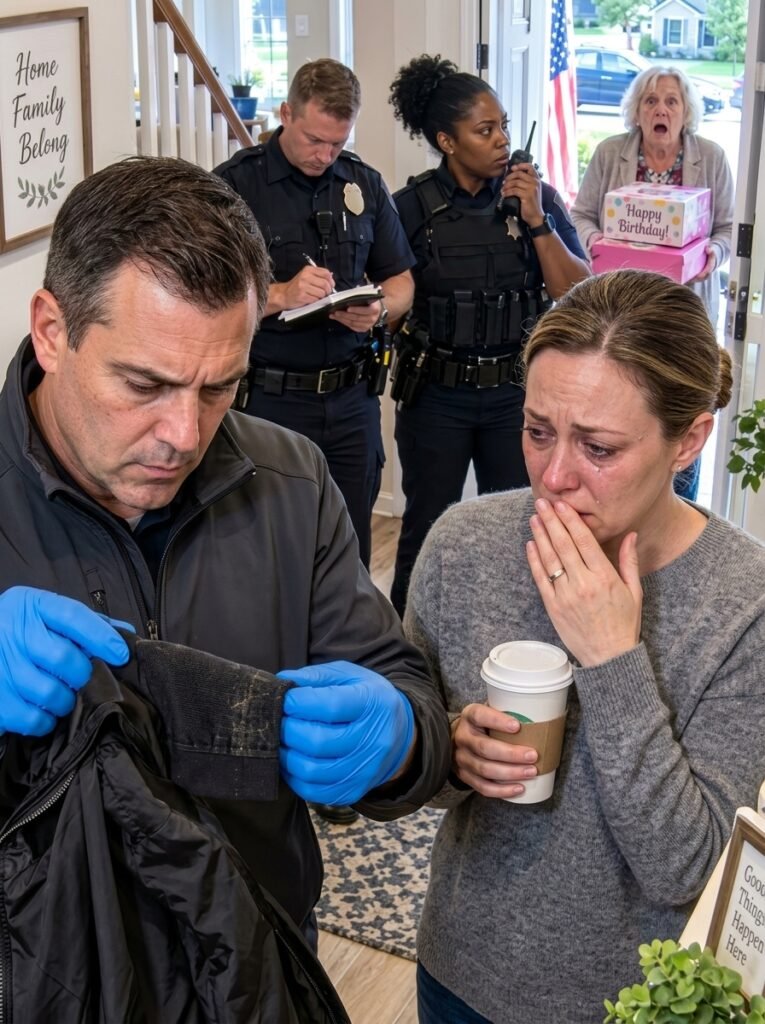
Her hands were wrapped around a paper coffee cup she had not touched.
The coffee had gone cold long before she realized she was still holding it.
Behind the ICU doors, machines kept making their small, steady sounds.
A chirp.
A breath.
A soft mechanical rhythm that made time feel both frozen and cruelly alive.
Katie was ten years old.
She was the kind of girl who turned cartwheels in grocery store aisles when Amanda was not looking, then apologized with a grin that made it impossible to stay mad.
She had scuffed sneakers, a bright ponytail, and gymnastics medals hanging from a hook in the hallway closet like a treasure display only she fully believed in.
She did not just love gymnastics.
She trusted it.
She trusted the mat to catch her, her body to remember, her coach to count, and her mother to clap even when the landing was not perfect.
That Tuesday evening, Katie had been walking to practice.
Same sidewalk.
Same crosswalk.
Same green light.
A car hit her and kept going.
By the time Amanda reached the hospital outside Atlanta, her hands were shaking so hard she could barely sign the hospital intake form.
A nurse asked her to confirm Katie’s date of birth.
Amanda had to say it twice because the first time her voice did not come out right.
A doctor told her Katie was stable.
Then he told her Katie would be monitored overnight.
Then he said intensive care.
Those words were too clean for what they did to a mother.
Stable sounded like something you could set a cup on.
Monitored sounded like someone was paying attention.
Intensive care sounded official, polished, and almost calm.
But Amanda looked through the glass and saw her child under a hospital blanket with an IV taped to her arm and a bruise beginning near her temple.
The world did not feel stable.
It felt broken in half.
At 8:46 p.m., her phone lit up with Andrew’s name.
Andrew was her husband.
He had been in her life for seven years.
He had been there when Katie lost her first baby tooth.
He had carried her half-asleep from the couch to bed during movie nights.
He had tied her sneakers outside the gym when she was too excited to sit still.
Amanda had trusted him with school pickups, insurance cards, house passwords, and the small ordinary access that makes a family feel like a family.
Trust rarely looks dramatic while you are giving it away.
Most of the time, it looks like a key on a hook, a password shared without fear, and your child calling someone by his first name because he has not earned anything warmer.
Amanda answered on the first ring.
But it was not Andrew’s voice.
It was Barbara Carter.
Andrew’s mother sounded offended before she even finished Amanda’s name.
“Amanda, where are you?”
Amanda stared at the ICU wall.
“The hospital.”
There was a pause.
Barbara’s silence had always been a warning sign.
It was the silence before a criticism, before a correction, before she found a way to make Amanda smaller while pretending she was only being practical.
“Andrew told me Katie is stable,” Barbara said.
“She’s in ICU.”
“But stable,” Barbara replied.
She said it as if a loophole had opened.
“My birthday is tomorrow,” Barbara continued. “Sixty. People are coming. I already told everyone you were cooking.”
For a moment, Amanda honestly believed she had misunderstood.
Grief does strange things to sound.
The hallway was loud, the monitor was chirping, and there was a man crying quietly near the vending machine.
Maybe Barbara had said something else.
Then Barbara started talking about chicken.
The chicken needed to be seasoned properly.
The sides needed to be hot.
The potatoes could not be trusted to anyone else.
Her friends were coming, and she would not be embarrassed because Amanda had decided to make everything about herself.
“My daughter was hit by a car,” Amanda said.
Barbara exhaled.
“You are so dramatic.”
Amanda looked at Katie’s little hand under the blanket.
A strip of medical tape crossed her skin.
The bruise near her temple looked darker now.
Some cruelty comes in screaming.
Barbara’s came in a normal voice.
That was what made it feel obscene.
In the background, Amanda heard Andrew.
Soft.
Reasonable.
The voice people trusted because it never raised itself.
“Mom, stop,” he said.
Then he spoke to Amanda.
“Amanda, please. Try to calm her down. Katie’s stable. The doctors said she’s okay.”
Barbara took the phone back.
“If you do not come home tonight and help, do not bother coming back,” she snapped. “I will not have my son dragged down by a woman who can’t show up for family.”
There it was.
Family.
Barbara’s favorite weapon.
She used the word whenever she wanted obedience without admitting she was demanding it.
Barbara did not own Amanda and Andrew’s house.
She had no legal power to lock Amanda out.
But Andrew had let his mother behave like a second wife in that home for so long that Barbara had started believing she held keys to everything.
Amanda pictured herself yelling.
She pictured slamming the phone against the hospital wall.
She pictured making a sound large enough for what Barbara had just done.
Instead, she looked at Katie.
“No,” Amanda said.
Barbara inhaled sharply.
Andrew went quiet.
Then he said, “Okay. We’ll talk later. Try to rest.”
Rest.
In a plastic chair beside intensive care.
Rest while her child’s wristband rubbed against the rail.
Rest while the woman who called herself family threatened exile over mashed potatoes.
Amanda did not sleep that night.
At 3:17 a.m., a nurse came in to adjust Katie’s line.
At 5:02 a.m., an officer stopped by with a preliminary police report and asked whether Katie had said anything before sedation.
She had not.
Amanda answered every question she could.
The officer wrote down crosswalk, green light, unknown vehicle, driver fled.
The words looked thin on the page.
They did not hold the weight of Katie’s body in that hospital bed.
At 7:28 a.m., Katie opened her eyes.
It did not happen like a movie.
There was no gasp.
No sudden rising music.
Just a slow blink and a tiny swallow.
“Mama?”
Amanda stood so fast the chair scraped against the floor.
The nurse put one hand on her shoulder.
“I’m here, baby,” Amanda said.
Katie’s fingers tightened around hers.
For three seconds, Amanda thought the world had given something back.
Then Katie looked at the ceiling, then at her mother, and whispered, “Andrew did it.”
Amanda’s body went cold.
“What?”
“He pushed me.”
For one second, Amanda’s mind tried to protect her.
Concussion.
Confusion.
Fear.
A child mixing faces because pain had scrambled the memory.
But Katie’s eyes were not wandering.
They were frightened, yes.
But they were clear.
“I was at the crosswalk,” she whispered. “I felt someone behind me. Two hands. Hard. I fell forward. I turned my head.”
Amanda held her breath.
“I saw him.”
Katie’s voice trembled.
“He had his dark jacket. The hood. White sneakers.”
A nurse wrote the time down.
7:31 a.m.
Detective Mark Reynolds arrived later that morning.
He was in his mid-forties, with tired eyes and the steady voice of a man who had learned not to rush terrified people.
He did not interrupt Katie.
He asked her to tell him what happened.
Then he asked her to tell him again.
Same details.
Same order.
Same jacket.
Same shoes.
Same two hands.
When Katie finished, Detective Reynolds looked at Amanda.
“We need to document this properly,” he said.
Amanda felt something inside her shift.
Not break.
Breaking had already happened.
This was different.
This was the cold beginning of understanding that grief had to make room for evidence.
At 10:14 a.m., two officers drove Amanda back to the house.
They did not send her alone.
Detective Reynolds said it gently, but clearly.
Not because Amanda was dangerous.
Because Andrew might be.
The house looked exactly the same.
That was the cruelest part.
The driveway was dry.
The mailbox flag was down.
A small American flag on the porch moved in the morning air.
Inside, the entryway smelled faintly of lemon cleaner and stale coffee.
Andrew’s dark jacket hung on the hook by the door.
Ordinary.
Clean.
Waiting.
Detective Reynolds put on gloves.
Amanda stood two feet behind him with her keys still in her hand.
The detective lifted the sleeve carefully.
A tiny pale thread clung near the cuff.
It was almost nothing.
A thread a person might brush away while leaving for work.
But Katie’s school uniform had pale trim along the collar.
The officer beside Amanda stopped writing.
Detective Reynolds turned slightly.
“Amanda,” he said, very quietly, “don’t touch anything yet.”
From the kitchen came the slow drip of the faucet.
Barbara’s birthday groceries sat on the counter in plastic bags.
Paper plates.
Napkins.
A plastic tablecloth.
Chicken thawing in the sink.
The chicken Barbara had cared about while Katie lay in ICU.
Amanda looked at it and understood something she would never forget.
A person can show you exactly what they value when they think you are too weak to notice.
Then Andrew’s phone buzzed on the hallway table.
Face down.
Detective Reynolds looked at it.
The screen lit up again before anyone moved.
Unknown number.
A message preview appeared.
Is the girl gone?
Nobody spoke.
The words glowed on the screen like something alive.
Then the crunch of tires came from the driveway.
Barbara’s car pulled in too fast.
Amanda turned toward the front window and saw her mother-in-law climb out in a church dress, holding a bakery box with both hands.
Her mouth was already open.
She had clearly arrived ready to scold.
Then she saw the police car.
The bakery box tilted.
The color drained from her face.
Barbara Carter, who had called a child in intensive care an inconvenience, suddenly looked like she had walked into a room where the rules had changed.
Detective Reynolds did not open the door for her.
He looked at the phone again.
It buzzed a second time.
This time the preview began with four words that made Amanda’s stomach turn.
Check the insurance file.
Barbara’s key scraped against the lock.
“Do not let her touch anything,” Detective Reynolds told the officer.
The door opened.
Barbara stepped in and froze.
Her eyes went from Amanda to the detective to the jacket sleeve still held in a gloved hand.
“What is this?” she demanded, but her voice cracked on the last word.
Amanda did not answer.
She was watching Barbara’s hands.
The bakery box was shaking.
Detective Reynolds asked whether Andrew was in the house.
Barbara said no too quickly.
Then she said she had no idea where he was.
Then she said Amanda was unstable.
The officer wrote all three statements down.
Detective Reynolds asked Amanda whether she could unlock Andrew’s phone.
Amanda stared at the device.
The password was their wedding date.
Of course it was.
There are betrayals so intimate they still use the shape of love to get through the door.
The phone opened.
The last messages were not subtle.
Unknown number.
Everything is ready.
The girl needs to disappear.
Tomorrow?
It’s done.
Amanda read them once.
Then again.
The words blurred, but they did not change.
Barbara made a small sound behind her.
Not grief.
Not shock.
Recognition.
Detective Reynolds asked where important family documents were kept.
Amanda said the desk in the bedroom.
She walked there with one officer beside her and one behind Barbara.
The bedroom was too neat.
Andrew’s side of the bed was made.
On the nightstand sat a printed movie ticket.
An alibi in paper form.
The timestamp was for the previous evening.
The theater was close enough to the gym route to matter.
In the desk drawer, Amanda found Katie’s insurance card.
Under it was a folder she did not recognize.
The tab had no label.
Inside was a life insurance policy.
Katie Carter.
$250,000.
Beneficiary: Andrew Carter.
Amanda did not make a sound.
Her body seemed to understand that noise would not help.
Beneath the policy was a power of attorney.
Amanda’s signature sat at the bottom.
It looked almost like hers.
Almost.
She had not signed it.
The document authorized the sale of the house.
Below that were printed Miami condo listings.
Red pen marked one page across the top.
After the problem is handled.
That was the moment Amanda understood that Barbara’s birthday had never been the emergency.
Katie had been.
Andrew had been standing behind the fire the whole time.
Detective Reynolds took the folder, photographed each page in place, then placed the documents into evidence sleeves.
He cataloged the phone.
He logged the jacket.
He asked for Katie’s school uniform from the hospital bag so the lab could compare fibers.
The house, which had once been a place of backpacks, dinner, laundry, and late bills, became a scene full of process verbs.
Photographed.
Bagged.
Logged.
Documented.
Barbara kept saying Andrew would explain.
Then she said Amanda had always exaggerated.
Then she said Katie was confused.
That was when Amanda turned around.
“My daughter is in ICU,” she said. “Choose your next sentence carefully.”
For once, Barbara did.
She closed her mouth.
Andrew was found that afternoon.
He was not at work.
He was not with a friend.
He was at a motel off the highway with cash, a backpack, and a second phone.
The second phone connected him to the unknown number.
The other person was a man Andrew knew through a former coworker, someone willing to be near the road, watch for Katie, and confirm when the timing was right.
The car that hit Katie had not been an accident.
Andrew had not pushed her into traffic by himself and then panicked.
He had planned around a child’s walk to gymnastics.
He had planned around the crosswalk.
He had planned around the green light.
He had planned around Amanda being too busy, too scared, and too obedient to ask questions.
But Katie had lived.
And Katie had remembered.
When Amanda returned to the hospital, Katie was sleeping.
Her face looked smaller than it ever had.
Amanda sat beside her and took her hand again.
She did not tell Katie about the folder.
Not yet.
She did not tell her about the messages.
She did not tell her about the condo listings or the forged power of attorney or the way Barbara’s mouth had trembled when the truth began to move through the house.
She only said, “You’re safe.”
Katie’s fingers twitched in her sleep.
Amanda stayed there until morning.
Over the next weeks, the case became a wall of paper.
Hospital records.
Police reports.
Phone extraction logs.
Insurance documents.
A fiber comparison.
A financial timeline.
A record of Andrew’s searches.
A record of the forged signature.
A record of a man who thought a family could be rearranged by removing a child from it.
Katie recovered slowly.
There were headaches.
There were nightmares.
There were days when she cried because her body would not do what it used to do.
The first time she watched her gymnastics team practice without her, she held Amanda’s hand so tightly Amanda could feel every small bone in her fingers.
“I don’t know if I can go back,” Katie whispered.
Amanda did not lie to her.
“You don’t have to know today,” she said.
That became their rule.
Not today.
Today, they only had to make it to dinner.
Today, they only had to do the exercises the physical therapist gave them.
Today, they only had to sleep with the hallway light on if that made the room feel safer.
Andrew tried to sound reasonable when he first spoke through an attorney.
He said Katie was mistaken.
He said Amanda had poisoned the child against him.
He said Barbara’s phone call had been misunderstood.
He said the insurance policy was normal planning.
He said the condo listings were just dreams.
He said the messages were taken out of context.
But context is a fragile shield when every document points in the same direction.
At the hearing, Barbara sat two rows behind him.
She wore a pale jacket and kept a tissue in her hand.
Amanda watched her from across the courtroom hallway and remembered the birthday chicken in the sink.
She remembered the paper plates.
She remembered Barbara saying, “You are so dramatic.”
An entire family had tried to teach Amanda that staying quiet was the price of being loved.
But love that requires silence is not love.
It is management.
Katie did not testify in open court at first.
Her statement was handled carefully.
Professionals documented it.
The timeline supported it.
The fiber evidence supported it.
The phone supported it.
Andrew’s own paper trail supported it.
By the time the truth was laid out, it did not arrive like one shocking thunderclap.
It arrived like a stack of pages nobody could push back into the folder.
Barbara cried when the insurance policy was discussed.
Amanda did not know whether those tears were for Katie, for Andrew, or for herself.
She no longer cared enough to sort them.
Afterward, Barbara tried to approach Amanda in the hallway.
“Amanda,” she said.
Amanda turned.
For years, that tone would have pulled her into apology.
This time, it did not.
Barbara’s lips trembled.
“I didn’t know everything,” she said.
Amanda looked at her for a long moment.
“You knew enough to call the hospital and ask about dinner,” she said.
Barbara looked away first.
That small movement felt like a door closing.
The house was sold later, but not the way Andrew intended.
The forged document was exposed.
Amanda’s rights were protected.
Katie’s medical needs came first.
Amanda packed the medals from the hallway closet herself.
She wrapped them in an old towel and placed them in a box between school photos and Katie’s favorite hoodie.
The medals looked cheap in her hands.
Still, Katie had earned every one.
Months later, Katie walked into the gym again.
Not to compete.
Not yet.
Just to stand there.
The place smelled like chalk and rubber mats.
Shoes squeaked in the distance.
A coach saw her and raised one hand, not too big, not too loud.
Katie leaned against Amanda’s side.
“I’m scared,” she said.
“I know,” Amanda answered.
Katie looked at the balance beam.
Then she looked at her mother.
“Can we just sit for a minute?”
So they sat.
That was all.
No miracle landing.
No perfect comeback.
Just a mother and daughter on a bench, breathing in the same room where fear had not been allowed to take the last word.
Amanda sometimes thought back to that hospital call.
Not because it was the worst thing Barbara had done.
It was not.
But because it revealed the shape of the whole family before the documents ever did.
Barbara had asked why Amanda was not cooking.
Andrew had asked her to calm his mother down.
Katie had opened her eyes and told the truth.
Three sentences.
Three doors.
Amanda chose the only one that mattered.
She stayed beside her daughter’s bed.
And when Katie squeezed her hand and whispered Andrew’s name, Amanda finally stopped trying to keep peace with people who had already declared war on her child.