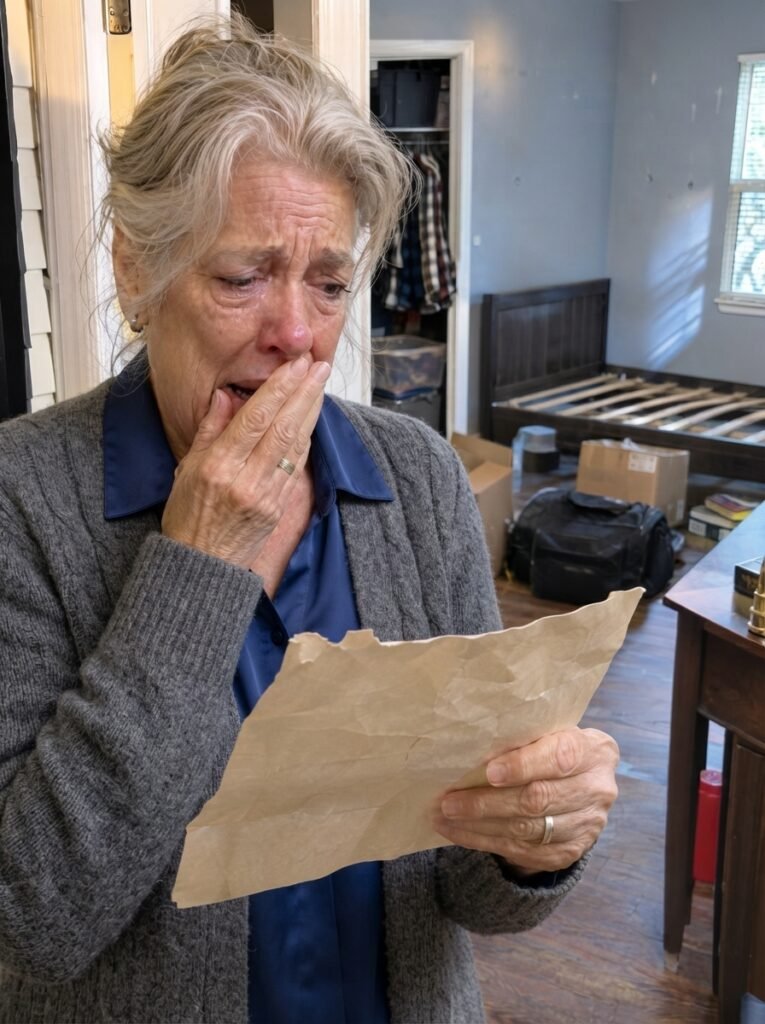
I came home 9 days early from Ireland and my 15-year-old autistic grandson was gone. My son-in-law smiled. “We sent him to a wilderness camp in Utah, Rowena. They’ll fix him.” Then a letter arrived in my mailbox. Corvin’s handwriting, on a torn paper bag. “Grandma, they took my shoes. Please come get me.”
My name is Rowena. I’m sixty-nine years old, and I live in Sacramento, California.
For thirty years, I was an investigator for Child Protective Services. I’ve seen every kind of harm a child can suffer. I retired three years ago.
My grandson, Corvin, is fifteen. He’s autistic. He’s brilliant with numbers and maps. He can name every train station in Europe. He doesn’t like loud noises, bright lights, or being touched without warning.
He’s the gentlest person I’ve ever known.
My daughter, Valentina, is his mother. Two years ago, she married a man named Lucius.
Lucius doesn’t understand autism. He calls it “bad behavior.” He says Corvin is “spoiled” and “needs discipline.”
In October, I took a trip to Ireland. Something I’d wanted to do my whole life. Three weeks.
Before I left, Corvin gave me a list of train stations to visit.
“Take pictures, Grandma. I’ll check them on the map.”
I called him every few days. In the second week, he stopped answering.
“He’s busy,” Valentina said. “He’s fine.”
My trip got cut short when my sister got sick. I flew home nine days early.
I went straight to Valentina’s house with a bag of Irish chocolate and a hundred train pictures.
Corvin’s room was empty.
His bed was stripped. His maps were gone from the walls.
“Where is Corvin?”
Lucius came into the hallway. He was smiling.
“He’s at a wilderness program in Utah. A therapeutic camp. For troubled teens. They take them out into the desert and teach them discipline. Toughen them up.”
“Corvin isn’t troubled. He’s autistic.”
“Same thing,” Lucius said. “He needs to learn to act normal. They’ll fix him.”
“How did you get him there?”
“They have a transport service. Two guys came and picked him up at four in the morning. It’s best when they don’t see it coming.”
I felt sick.
I’d spent thirty years investigating places like that.
“Valentina,” I said. “You let them take him in the middle of the night?”
My daughter wouldn’t look at me.
“Lucius said it was the only way, Mom. He said they’re the best. It’s only ninety days.”
“Ninety days?”
“Don’t start, Rowena,” Lucius snapped. “He’s my stepson. I’m the man of this house. This is our decision, not yours. Stay out of it.”
I didn’t argue with him.
I just said, “Okay.”
Then I went home and started making phone calls.
That’s what I did for thirty years. I made phone calls.
The next morning, a letter arrived in my mailbox.
No return address. The envelope was a torn piece of a brown paper bag, folded and taped shut. The stamp was crooked.
Inside, in Corvin’s tiny, careful handwriting:
“Grandma. A lady at the gas station gave me a stamp. I don’t have much time. They took my shoes so we can’t run away. They make us hike all day. If we stop, we don’t get dinner. A boy fainted yesterday. They said he was faking. I’m scared. I can’t sleep. It’s so loud at night. Please come get me. The camp is called Red Mesa. Love, Corvin.”
My hands were shaking.
I looked up Red Mesa Wilderness Program on my computer.
Then I called an old friend at the Utah licensing office.
She called me back in an hour. Her voice was tight.
“Rowena, Red Mesa’s license was suspended four months ago. Two kids were hospitalized. They’re not allowed to operate.”
She paused.
“They shouldn’t have any children out there at all.”
PART 2
I was on a plane to Salt Lake City the next morning.
“Thank you for calling,” the investigator said. “We’ve been trying to find where they moved. Your grandson’s letter gave us the locat
ion.
We drove out on a dirt road for an hour. Red rocks. Dust. Nothing for miles.
Then we saw it. A cluster of old tents and a pickup truck near a dry creek bed.
A man in sunglasses walked out to meet us. His name tag said “Director Quade.”
“Can I help you? This is private property.”
The investigator held up a paper.
“Your license was suspended in June. You’re operating illegally. We’re here to remove every child in your custody.”
Mr. Quade’s smile disappeared.
“These are troubled kids. Their parents signed contracts. You can’t just take them.”
“Watch us,” the deputy said.
There were eleven boys at the camp. Ages thirteen to seventeen. They were sitting in a line in the dirt. Sunburned. Thin. Barefoot.
I saw Corvin at the end of the line.
He was rocking back and forth with his hands over his ears. His feet were cracked and bleeding. His lips were peeling from the sun. He’d lost so much weight his face looked different.
“Corvin.”
He looked up.
For a second, he didn’t recognize me. Then he did.
He didn’t run to me. He doesn’t like sudden movements. He just whispered, “Grandma. You got my letter.”
“I got your letter, sweetheart.”
I knelt down very slowly and held out my hand. He took it.
“Can I go home now?”
“Yes. Right now.”
The state removed every child from Red Mesa that afternoon. Three of them were taken to the hospital for dehydration and infected blisters. One boy had a broken wrist that had never been treated.
Mr. Quade was arrested for operating without a license and child abuse. Two of his staff members were arrested too.
Corvin spent two nights in a hospital in Utah. When I brought him his shoes, his old soft sneakers from home, he held them for a long time before he put them on.
“I missed my shoes,” he said.
When we got back to California, Valentina was waiting at the airport. She was crying.
“Mom, I didn’t know. Lucius told me it was a good place. He showed me a website.”
“Did you call and check their license?”
She shook her head.
“Did you ask Corvin what he wanted?”
She shook her head again.
Corvin stood next to me, not looking at his mother. Holding his shoes.
Valentina knelt down in front of him.
“I’m sorry, baby. I’m so sorry. I’ll never let anyone do that to you again.”
He looked at her for a long time.
“Okay,” he said quietly.
Valentina filed for divorce in December. She said she couldn’t stay married to a man who looked at her son and saw something to “fix.”
Corvin lives with me now, part of the week. His mother too, sometimes. We’re slowly healing.
His room at my house is covered with maps again. The whole wall.
Last month, he added a new one.
A map of Ireland.
He’d marked every train station I visited with a little red pin. Then he pointed to one in the middle of the country.
“Grandma, next time, can I come with you?”
“Yes, sweetheart,” I said. “Next time, you’re coming with me.”
THE END.