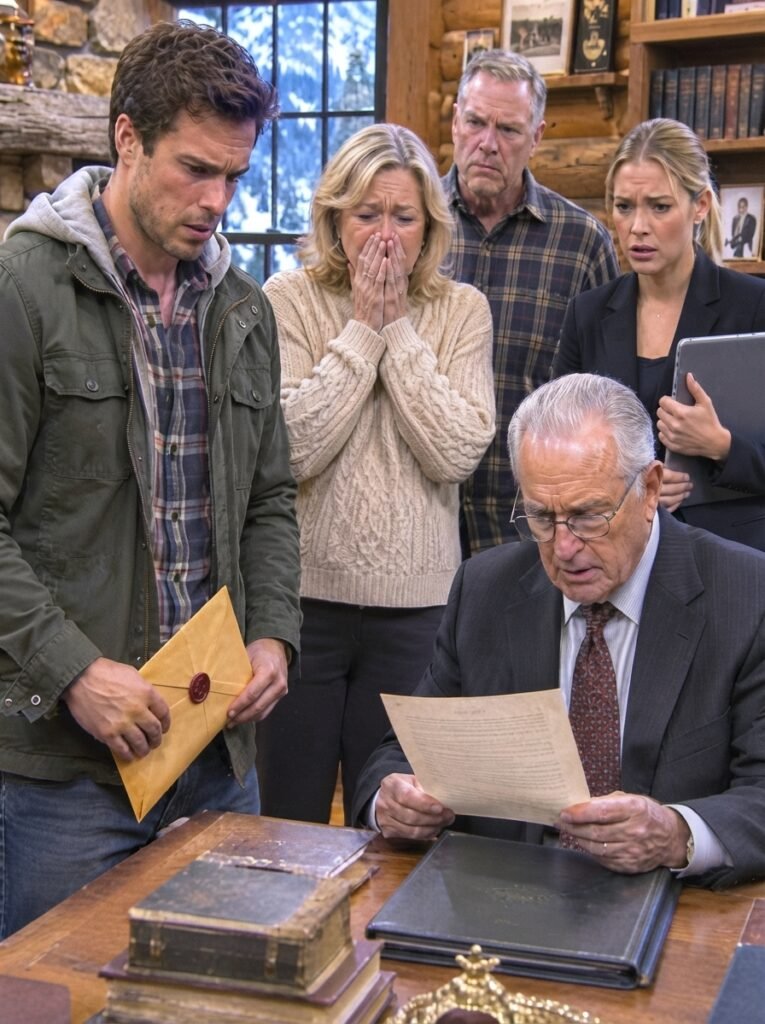
At our family reunion, my aunt glared across the table and said, “You don’t even count—you’re just the kid they should’ve left behind.” My cousin snorted. My mom stayed silent. And right then, with plates still full and rain already pouring outside, I stood up and said, “This isn’t your reunion. This is my property. Get out.” And I watched every one of them scramble into the storm.
My cousin snorted. Jess laughed under her breath.
My mother sat three seats away with one hand around her water glass and said absolutely nothing.
Rain hammered the windows behind them.
I set my fork down.
For three days, these people had filled the lake house with luggage, coolers, wet towels, half-finished drinks, and complaints.
I had cooked for them, cleaned after them, fixed what they broke, and listened while they treated me like the relative lucky enough to be allowed in the room.
Now Melinda was smiling at me like she had finally found the line that would put me back in my place.
She had no idea whose place she was sitting in.
My name is Kayn. I’m 27, and the two-story lake house on that wooded Oregon property belongs to me.
Almost nobody in my family knew.
My grandfather left it to me. He was the one person who never treated my quiet personality like a defect. After he died, I kept the deed private, paid the taxes, replaced the roof, maintained the dock, cut the grass, and let everyone assume my mother still owned the place.
They never asked.
That assumption became convenient for them.
Every summer for three years, the family reunion happened there.
And every year, I handled everything.
I stocked almond milk for Jess, gluten-free snacks for Aunt Rachel, sugar-free lemonade for Uncle Mike.
I checked the plumbing, bought towels, cleared the dock, arranged food, and made sure every bedroom was ready.
Nobody thanked me.
They walked in without knocking.
This year was worse.
A week before the reunion, Mom called and said, “I told Melinda you’d have the house ready.”
Not asked.
Told.
Then I learned Melinda had invited fifteen extra people—second cousins, neighbors, new in-laws, people I barely knew.
Friday morning, SUVs rolled down my gravel driveway one after another. Doors slammed. Coolers hit the ground. Kids ran through the entryway.
Jess walked inside and called, “Kayn, be a gem and grab the cooler.”
So I grabbed it.
That first night, I stayed mostly in the kitchen while everyone else laughed around the dining table.
When the water heater acted up, I fixed it.
When gum ended up stuck beneath a chair, I cleaned it.
Saturday afternoon, Melinda sat on the patio surveying the property like an inspector.
“You really should do something about those bushes,” she said. “And that dock still leans.”
I looked at her.
She wasn’t finished.
“This house used to have charm. Shame nobody takes care of it anymore.”
Something shifted in me, but I swallowed it.
That evening, I tried sitting with everyone.
My cousin Tyler looked across the table. “So, Kayn, you still doing that computer thing?”
“Remote cybersecurity.”
He gave me a fake-impressed look.
“Wow. Guess that’s a real job now, huh?”
The table erupted.
Even my mother laughed.
I walked outside and sat near the dock until the noise behind me became muffled.
By Sunday brunch, I had stopped expecting anything different.
I made pancakes, bacon, fruit platters—the whole spread. Around noon, gray clouds covered the lake and rain began tapping the windows.
Everyone crowded around the long dining table.
My plate was already getting cold when Melinda leaned forward.
Her eyes narrowed.
Then came the sentence.
“You don’t even count. You’re just the kid they should’ve left behind.”
A few people laughed.
My mother stayed silent.
The rain came harder.
I watched a drop of water slide down the outside of the window. Then another.
My hand shook once.
I put the fork down carefully and pushed my chair back.
The legs scraped across the hardwood.
Every conversation stopped.
I stood.
“This isn’t your reunion,” I said.
Melinda’s smirk held.
I looked directly at her.
“This is my property. Get out.”
Nobody moved.
Jess blinked.
Tyler stared.
My mother’s brow tightened like she was trying to decide whether I had finally lost my mind.
Melinda actually leaned back in her chair.
“Excuse me?”
“You heard me.”
I walked around the table toward the sliding glass doors.
“Get out. All of you.”
Melinda folded her hands and gave me that familiar patronizing smile.
“You’re being dramatic. Sit down before you embarrass yourself.”
I opened the patio door.
Cold rain and the smell of wet pine rushed into the room. Wind pushed mist across the threshold. Somewhere beyond the lake, thunder rolled.
I turned around.
Nobody was laughing anymore.
“This isn’t a request.”
Tyler gave a nervous chuckle.
“Kayn, come on. You’re not seriously kicking everyone out over a joke.”
“A joke?”
I looked around the table.
“You spent the entire weekend using this place like a free resort. You ate food I bought. Slept in rooms I cleaned. Complained about property I maintain. Then she called me a mistake to my face.”
I looked at my mother.
“And every one of you let her.”
Her fingers tightened around the glass.
Still nothing.
Aunt Rachel finally spoke.
“You can’t throw your own family into a storm.”
“You’ve treated me like less than family for years.”
Melinda stood slowly.
“This is ridiculous. You don’t own this place.”
There it was.
The assumption underneath everything.
I stepped away from the open door.
Rain drummed against the deck. The room had gone so quiet I could hear silverware shifting on a plate.
Melinda crossed her arms.
“This is your mother’s house. Stop pretending you have authority you don’t have.”
For the first time all weekend, I smiled.
Not because anything was funny.
Because upstairs, inside the top drawer of my desk, was a folder they had never seen.
The deed.
The tax records.
The letter from my grandfather.
I looked from Melinda to my mother, then back to the table full of people who had spent years deciding exactly how little I mattered.
“This house is mine,” I said. “My name is on the deed.”
Melinda’s face changed.
And before anyone could speak, I turned toward the stairs.
PART 2 — THE LETTER MY GRANDFATHER LEFT BEHIND
I climbed the stairs without looking back.
Behind me, the dining room erupted.
Melinda’s voice rose above everyone else’s.
“Someone needs to stop him.”
Tyler laughed nervously.
“This is getting ridiculous.”
My mother called my name.
“Kayn, come back downstairs.”
I kept walking.
For twenty-seven years, that voice had been enough to make me stop whatever I was doing.
Not because she was always right.
Because I had been raised to believe that keeping my mother happy was the same thing as keeping the family together.
But there was something different about hearing her call me now.
She hadn’t defended me when her sister said I should have been abandoned.
She hadn’t corrected Tyler when he mocked my career.
She hadn’t thanked me for three years of maintaining a property she knew wasn’t hers.
Yet the moment I refused to tolerate another insult, she suddenly found her voice.
I reached my bedroom and closed the door.
The room smelled faintly of cedar.
Rain struck the windows overlooking the lake.
I walked to my desk and opened the top drawer.
Inside was a dark green folder.
My grandfather had given me that folder three weeks before he died.
At the time, I hadn’t understood why his hands were shaking when he passed it across the table.
Now I understood perfectly.
I took it downstairs.
Everyone was still gathered around the dining table.
Nobody had packed a single bag.
Melinda was standing beside my mother’s chair, speaking in a low, furious voice.
When she saw me, she straightened.
“Are you finished with your little tantrum?”
I placed the folder on the table.
“No.”
She rolled her eyes.
I opened it.
The first document was a certified copy of the recorded deed.
The second showed the property tax history.
The third contained the estate distribution documents identifying me as the person who had inherited the lake house.
I turned the folder toward Melinda.
“Read.”
She glanced down.
Then her expression changed.
Only slightly.
But I noticed.
Her eyes stopped moving.
Her mouth tightened.
She picked up the deed.
“This can’t be right.”
I said nothing.
She looked toward my mother.
“Diane?”
My mother’s face had gone pale.
“Melinda, please.”
My aunt stared at her.
“You told me the house was still in your name.”
My mother looked down.
I felt something tighten in my chest.
There it was.
The first confirmation.
My mother hadn’t simply allowed everyone to misunderstand.
She had helped create the misunderstanding.
Melinda turned back to me.
“Your grandfather wouldn’t have done this without telling the family.”
“He did.”
“Why?”
I looked directly at her.
“Because it was his property.”
She slammed the paper down.
“That doesn’t answer my question.”
I closed the folder.
“Actually, it does.”
Tyler leaned forward.
“Wait, so you’re saying Grandpa left the entire lake house to you?”
“Yes.”
“And nobody else?”
“Yes.”
He stared.
Then laughed.
“That’s insane.”
I looked at him.
“Why?”
“Because you’re the youngest.”
I waited.
He continued.
“Because you barely even came to family gatherings.”
I almost smiled.
“Tyler, I organized the last three.”
He waved his hand.
“You know what I mean.”
I did.
He meant that being quiet had made me invisible.
And being invisible meant I wasn’t supposed to own anything worth wanting.
Melinda stepped closer.
“This is family property.”
I shook my head.
“It was Grandpa’s property.”
“And now it’s mine.”
Her eyes narrowed.
“You’re not going to keep it.”
The room went still.
I stared at her.
“What did you say?”
She lifted her chin.
“You heard me.”
I felt a strange calm settle over me.
For the first time, Melinda wasn’t pretending.
The insults had never been the entire problem.
The real problem was that she believed anything valuable in this family should eventually belong to the people who demanded it most loudly.
I glanced toward the clock.
“It’s twelve forty-seven.”
Nobody spoke.
“I want everyone packed and ready to leave.”
Aunt Rachel looked toward the windows.
“In this weather?”
I glanced outside.
The rain was heavy, but the roads were open.
There was no flooding.
No evacuation warning.
No reason anyone needed to remain inside my home except convenience.
“Take your time packing safely.”
I looked at Melinda.
“But you’re not staying another night.”
She crossed her arms.
“Make me.”
I took out my phone.
Then I called the county’s nonemergency dispatch number to ask how to handle guests refusing to leave private property.
I didn’t threaten anyone.
I didn’t touch anyone’s belongings.
And I didn’t pretend the police could settle a property dispute simply because I wanted them to.
I explained that several invited guests had been told to leave and that some were refusing.
The dispatcher took my information and explained the next steps.
When I ended the call, Melinda was staring at me.
“You actually called the police?”
“I asked for assistance.”
She laughed bitterly.
“Over family?”
I looked at her.
“No.”
“Over people refusing to leave my house.”
That was when Jess stood.
She pushed her chair back so hard it struck the wall.
“You know what, Kayn?”
I looked at her.
“You’ve always been jealous of us.”
I blinked.
“Jealous?”
She folded her arms.
“Yes.”
“Because we actually have lives.”
I stared at her.
She continued.
“Friends.”
“Relationships.”
“Families.”
“And you sit alone in this creepy house with your computers.”
Tyler snorted.
I felt the familiar sting.
But it didn’t last.
I looked around the table.
At the dirty dishes.
The stained tablecloth.
The empty beer cans.
The relatives who had spent three days enjoying a home they believed I had no right to control.
Then I looked at Jess.
“If my life is so pathetic, why have you spent every summer trying to vacation in it?”
Her smile vanished.
Someone near the end of the table coughed.
Tyler looked away.
Jess opened her mouth.
Then closed it.
I continued.
“You don’t have to like my job.”
“You don’t have to understand why I prefer quiet.”
“You don’t even have to like me.”
I paused.
“But you don’t get to insult me while expecting me to provide your vacations.”
Melinda slammed her palm against the table.
“Enough!”
I looked at her.
“Exactly.”
My mother finally stood.
“Kayn, can we please talk privately?”
I studied her.
Her face looked tired.
For a moment, I saw the woman who had raised me.
The woman who packed my school lunches.
The woman who sat beside me when I had pneumonia.
The woman whose approval I had spent my entire childhood trying to earn.
I wanted to say yes.
I wanted to believe that if we stepped into the kitchen, she would finally tell me I mattered.
Instead, I remembered her silence.
I looked at her.
“You can say whatever you need to say here.”
She glanced toward Melinda.
“Please.”
I shook my head.
“No more private conversations where everyone else gets to pretend nothing happened.”
Her eyes filled.
“Kayn.”
I waited.
She swallowed.
“Your aunt didn’t mean it.”
Something inside me went cold.
I stared at her.
“Which part?”
My mother blinked.
“What?”
“Which part didn’t she mean?”
I took one step closer.
“The part where she said I don’t count?”
My mother’s lips trembled.
“Or the part where she said I should have been left behind?”
She looked down.
I nodded slowly.
“That’s what I thought.”
Melinda scoffed.
“Oh, for heaven’s sake.”
I turned toward her.
“Pack your things.”
The first suitcase came down the stairs twenty minutes later.
Then another.
Then three more.
The mood had changed completely.
People who had spent the weekend demanding fresh towels were suddenly capable of carrying their own luggage.
Jess dragged two oversized suitcases across the hardwood.
Tyler carried a cooler.
Aunt Rachel gathered her medication and called a nearby hotel.
Uncle Mike checked the weather and started his SUV.
Nobody was happy.
But nobody was laughing anymore.
Melinda remained in the dining room.
She stood beside the window with her phone pressed to her ear.
I couldn’t hear every word.
But I heard enough.
“It’s in his name.”
A pause.
“No, I didn’t know.”
Another pause.
Then she lowered her voice.
“We need to deal with this before he starts asking questions.”
I stopped walking.
My hand tightened around the banister.
Before I could speak, she ended the call.
She turned.
Our eyes met.
For one brief second, I saw fear.
Not anger.
Not embarrassment.
Fear.
Then it disappeared.
She lifted her chin.
“You’ll regret humiliating this family.”
I looked at her.
“Who were you talking to?”
She slipped her phone into her pocket.
“None of your business.”
I stared.
“Melinda.”
She moved toward the hallway.
“Get out of my way.”
I stepped aside.
She passed me without another word.
But I had heard something I couldn’t forget.
Before he starts asking questions.
What questions?
And why did the deed frighten her more than being asked to leave?
By two fifteen, most of the vehicles had pulled out of the driveway.
Rainwater streamed down the windows.
The gravel was covered in tire tracks.
My house smelled like wet shoes and leftover pancakes.
I stood on the porch watching the last SUV disappear between the trees.
My mother was still inside.
I found her in the kitchen.
She was wiping a perfectly clean countertop.
The same small, repetitive movement she had made when I was a child and something was wrong.
I leaned against the doorway.
“Mom.”
She stopped.
I waited.
She didn’t turn around.
Finally, she whispered:
“I didn’t know Melinda would say that.”
I stared at her.
“But you knew she thought it.”
Her shoulders tightened.
“Kayn, please.”
I took a breath.
“Did you tell her the house was yours?”
She said nothing.
“Mom.”
Her voice broke.
“Yes.”
I closed my eyes.
“Why?”
She turned around.
“Because I didn’t want everyone knowing Grandpa left it to you.”
I stared.
“Why not?”
Tears filled her eyes.
“Because they would have been angry.”
I almost laughed.
“So you let them be angry at me for something they didn’t even know about?”
She looked away.
I stepped closer.
“You watched me cook for them.”
“Yes.”
“You watched me clean up after them.”
“Yes.”
“You watched them treat me like hired help.”
Her lips trembled.
“I thought it was easier.”
I stared at her.
“Easier for whom?”
She couldn’t answer.
Then she said something that changed the entire conversation.
“Your grandfather knew this would happen.”
My pulse quickened.
“What?”
She looked toward the green folder.
“He knew Melinda would fight you.”
I felt cold.
“How?”
My mother began crying.
“Because she tried to take the house before he died.”
I stared at her.
And suddenly, the letter in my grandfather’s folder felt much heavier than paper.
PART 3 — THE SIGNATURE THAT DIDN’T BELONG TO HIM
My mother sat down slowly.
I remained standing.
Outside, thunder rolled across the lake.
For a long moment, neither of us spoke.
Then I asked:
“What do you mean Melinda tried to take the house?”
Mom folded her hands.
“Your grandfather was getting older.”
“I know.”
“He was having trouble keeping up with everything.”
I stared at her.
“He wasn’t incapable of making decisions.”
She nodded quickly.
“I know.”
I waited.
She swallowed.
“Melinda kept telling him the property was too much responsibility.”
My stomach tightened.
“She said someone needed to manage it.”
I looked toward the green folder.
“Who?”
Mom closed her eyes.
“Her.”
Of course.
I took a slow breath.
“What happened?”
Mom stared at the table.
“She brought him papers.”
“What papers?”
“A property transfer.”
I went still.
“She wanted Grandpa to sign the house over to her?”
Mom nodded.
“She said it would make things easier.”
I stared at her.
“And what did he say?”
Mom’s eyes filled.
“He refused.”
I felt a small surge of relief.
Then she continued.
“But she didn’t stop asking.”
My grandfather’s name was Walter Mercer.
He had built the lake house forty-one years earlier with his own hands.
He wasn’t wealthy.
He had worked as an electrician for most of his life.
He saved carefully.
Bought the land when nobody wanted it.
And spent nearly a decade turning a rough wooden cabin into the two-story house overlooking the water.
When I was little, he used to take me down to the dock with a fishing rod and a thermos of hot chocolate.
I rarely caught anything.
He never seemed to mind.
He would sit beside me and tell stories about the trees.
The storms.
The old logging road.
The year the lake froze hard enough for people to walk across it.
He never told me I was too quiet.
Never asked why I wasn’t more like Tyler.
Never compared me to Jess.
He simply let me be myself.
When I was sixteen, he gave me an old laptop.
The battery barely worked.
The screen had a dark patch in one corner.
But he told me it was mine.
I spent that entire summer teaching myself how to repair it.
Grandpa would sit beside me, pretending to understand what I was doing.
Then he would grin.
“You’ve got a good brain, kid.”
I smiled every time.
Because in a family where being loud was treated like being important, Grandpa was the only person who noticed what I could do without making a performance of it.
Three weeks before he died, he asked me to visit.
I drove up on a Tuesday.
The house was quiet.
Grandpa sat beside the fireplace wearing his old brown cardigan.
He looked smaller than I remembered.
But his eyes were clear.
He handed me the green folder.
“Keep this somewhere safe.”
I frowned.
“What is it?”
He smiled.
“Something I want you to have.”
I opened it.
The deed.
The estate documents.
A letter.
I looked up.
“Grandpa, I don’t understand.”
He reached for my hand.
“You will.”
I shook my head.
“Why me?”
His smile faded.
“Because you never asked me for it.”
I stared.
He continued.
“Your aunt wants the house.”
I swallowed.
“I know she likes it.”
He gave a dry laugh.
“She likes owning things.”
I looked down.
“Grandpa—”
He squeezed my hand.
“Listen.”
I looked at him.
“This place has always been peaceful when you’re here.”
My throat tightened.
He continued.
“Other people come here and see what they can get.”
“You come here and see what needs fixing.”
I felt tears rise.
“Grandpa.”
He smiled.
“I know the difference.”
After my mother told me about Melinda’s attempted transfer, I opened the folder again.
I had read Grandpa’s letter before.
But now I noticed something I had overlooked.
At the bottom, beneath his signature, was a sentence written in smaller handwriting.
If anyone questions why I chose you, ask Margaret Bell about the papers Melinda brought me.
I stared.
Margaret Bell.
Grandpa’s attorney.
I remembered meeting her once at the funeral.
She was a woman in her sixties with silver hair and a careful, professional manner.
I took out my phone.
Then looked at Mom.
“Did you know about this?”
She stared at the sentence.
Her face changed.
“No.”
I studied her.
“Are you sure?”
She nodded.
“I never saw that.”
I looked down.
Then I asked:
“Did Melinda ever get Grandpa to sign anything?”
Mom hesitated.
That hesitation told me enough.
“Mom.”
She swallowed.
“I don’t know.”
I stared at her.
She continued.
“I know there was an argument.”
“When?”
“About six months before he died.”
I waited.
“She came here with Tyler.”
My stomach tightened.
“Tyler?”
Mom nodded.
“He said Grandpa needed help managing the property.”
I closed my eyes.
Of course he did.
The cousin who mocked my remote cybersecurity job had apparently been very interested in managing valuable assets himself.
I looked at Mom.
“What happened?”
She stared at the table.
“Grandpa told them to leave.”
I felt a chill.
“And?”
She whispered:
“Afterward, he changed his locks.”
The next morning, I called Margaret Bell.
Her office was in Eugene.
She remembered me immediately.
“Kayn Mercer.”
Her voice softened.
“Your grandfather spoke about you often.”
My throat tightened.
“Thank you.”
I explained what had happened at the reunion.
The insults.
The deed.
Melinda’s reaction.
My mother’s admission.
Margaret listened quietly.
Then she asked:
“Do you still have the green folder?”
“Yes.”
“Good.”
She paused.
“Your grandfather hoped you would never need the rest of the information.”
I sat straighter.
“What information?”
She took a breath.
“Kayn, I think you should come to my office.”
I arrived just after noon.
Margaret greeted me in a small conference room.
On the table sat a thick file.
She waited until I was seated.
Then she opened it.
“Your grandfather came to see me approximately eight months before his death.”
I nodded.
“He was concerned about pressure from relatives.”
My stomach tightened.
“Melinda?”
Margaret nodded.
“And Tyler.”
I stared.
She continued.
“They had been encouraging him to transfer the property into a family holding arrangement.”
I frowned.
“What kind of arrangement?”
Margaret turned a page.
“One that would have placed effective control in their hands.”
I felt sick.
“Did he agree?”
“No.”
I exhaled.
“But he was worried.”
Margaret studied me.
“He said your aunt was becoming increasingly aggressive.”
I looked down.
“He didn’t tell me.”
“He wanted to protect you.”
My throat tightened.
Margaret continued.
“He also wanted to ensure his wishes were documented clearly.”
She slid a paper toward me.
It was a signed statement.
Grandpa’s signature appeared at the bottom.
I recognized the handwriting immediately.
The statement explained that he intended the lake house to pass to me.
It described his reasons.
My years helping maintain the property.
Our relationship.
His desire for the house to remain a peaceful place.
And his concern that certain relatives viewed it primarily as a financial asset.
I stared at the page.
My eyes burned.
Margaret waited.
Then she turned another document toward me.
“This is the paper your aunt brought him.”
I looked down.
It was a proposed transfer document.
Grandpa’s name appeared near the bottom.
So did a signature.
I stared at it.
Something was wrong.
The shape of the letters looked familiar.
But the pressure was different.
The final stroke curved upward in a way Grandpa never wrote.
I leaned closer.
“That isn’t his signature.”
Margaret nodded.
“Your grandfather said the same thing.”
My pulse quickened.
“What happened?”
She folded her hands.
“He told me he had refused to sign the document.”
I stared.
“Then how did his signature get there?”
Margaret’s expression tightened.
“That was never established.”
I felt cold.
She continued.
“The document was not accepted as a valid transfer.”
“The property remained in his name.”
“And he took additional steps to protect his estate plan.”
I stared at the page.
For years, Melinda had treated me like I was too stupid to understand anything important.
She had mocked my work.
Dismissed my opinions.
Ordered me around in the house Grandpa left me.
And now I was looking at a document bearing a signature my grandfather had denied making.
I took a breath.
“Was this ever reported?”
Margaret nodded.
“Your grandfather consulted with the appropriate authorities and preserved the original.”
I looked at her.
“What happened?”
“The matter did not result in a prosecution at that time.”
I sat back.
She continued.
“But he wanted the records available if someone later challenged his estate plan.”
I looked down.
Then I saw something else.
A name typed beneath the signature line.
Prepared by: Tyler Mercer.
I stared.
My cousin.
The man who had laughed at my job.
The man who had spent three summers sleeping in a house he knew Grandpa had left to me.
The man who had acted shocked when I showed everyone the deed.
He hadn’t been shocked because he didn’t know.
He had been shocked because I finally knew enough to challenge him.
I drove home in silence.
The rain had stopped.
Sunlight broke through the trees.
The lake was smooth and gray.
I pulled into the driveway and sat in my car for several minutes.
Then I checked my phone.
Seventeen messages.
Most from relatives.
Some angry.
Some demanding explanations.
One from Jess.
You made Grandma’s side of the family look terrible.
One from Aunt Rachel.
I understand you’re upset, but family shouldn’t treat family this way.
One from Tyler.
We need to talk about Grandpa’s estate.
I stared at that message.
Then another arrived.
From Melinda.
Your grandfather wasn’t thinking clearly when he signed those papers.
I felt my stomach tighten.
She continued.
You know that house was supposed to stay with the family.
I read the words twice.
Then typed:
It did stay with the family.
I waited.
Three dots appeared.
Then disappeared.
Then another message arrived.
Don’t get clever with me.
I stared at the screen.
Then wrote:
I met with Margaret Bell today.
For almost a minute, nothing happened.
Then my phone rang.
Melinda.
I didn’t answer.
It rang again.
Then Tyler called.
Then Melinda again.
I sat quietly.
For the first time, the people who had spent years making me feel powerless were the ones desperate for my attention.
That evening, I received a call from my mother.
Her voice sounded strained.
“Kayn?”
“Yes?”
“Melinda came over.”
I sat straighter.
“What happened?”
“She was furious.”
I closed my eyes.
“About what?”
“She said you were digging into things that didn’t concern you.”
I almost laughed.
“The ownership of my house doesn’t concern me?”
Mom said nothing.
Then she whispered:
“There’s something else.”
My stomach tightened.
“What?”
She took a shaky breath.
“Your aunt says she has a letter from Grandpa.”
I went still.
“What letter?”
Mom swallowed.
“She says it proves he never intended to leave the house to you.”
I stared at the wall.
Then my mother said the words that made my blood run cold.
“She says she’s going to challenge the inheritance.”
PART 4 — THE FAMILY MEETING THAT CHANGED EVERYTHING
Melinda filed her challenge six weeks later.
She claimed Grandpa had been confused.
She claimed I had isolated him.
She claimed I had manipulated an elderly man into giving me valuable property.
And she claimed the rest of the family had been deliberately excluded.
I read the allegations in my attorney’s office.
For a long time, I couldn’t speak.
Then I looked at Margaret.
“She says I manipulated him?”
Margaret nodded.
“That’s the allegation.”
I stared at the papers.
I thought of Grandpa teaching me how to fish.
Of the old laptop.
Of the roof I helped repair.
Of the mornings we spent drinking coffee on the porch.
Of the last conversation we had beside his fireplace.
Then I thought of Melinda.
The woman who visited twice a year.
The woman who complained about the dock.
The woman who called Grandpa stubborn whenever he refused to give her money.
I looked at Margaret.
“Can she take the house?”
Margaret folded her hands.
“Anyone can make allegations.”
I waited.
“But allegations are not evidence.”
She slid a folder toward me.
“Your grandfather prepared for this.”
The first piece of evidence was the signed statement I had already seen.
The second was correspondence documenting Grandpa’s instructions.
The third was a series of dated notes Margaret had made after meeting with him.
But the fourth was something I hadn’t known existed.
A video.
I stared at the screen.
Margaret looked at me.
“Your grandfather agreed to record a statement concerning his wishes.”
My throat tightened.
“When?”
“Approximately four months before he died.”
I swallowed.
“Can I see it?”
She nodded.
The video began.
Grandpa sat in a chair beside his fireplace.
He wore his brown cardigan.
His hair was thinner than I remembered.
But his eyes were clear.
He looked directly at the camera.
“My name is Walter Mercer.”
My chest tightened.
He continued.
“I am making this statement because I want my wishes understood.”
He paused.
“I own the lake property.”
“I built that house.”
“And I have decided to leave it to my grandchild, Kayn.”
My eyes filled.
Grandpa smiled faintly.
“Kayn never asked me for the house.”
“He never asked me for money.”
“He never treated me like something he could inherit.”
I covered my mouth.
He continued.
“He came when the roof leaked.”
“He came when the dock needed work.”
“He came when I was lonely.”
A tear slipped down my cheek.
Grandpa looked down for a moment.
Then back at the camera.
“Some members of my family will be angry.”
His expression hardened.
“They believe the loudest person deserves the most.”
He shook his head.
“That isn’t how I see it.”
He paused.
“I want Kayn to have the house because he understands what it means.”
My chest tightened.
“He understands that a home isn’t just something you own.”
“It’s something you care for.”
Then Grandpa smiled.
And said the sentence that broke me.
“If anybody tells Kayn he doesn’t belong there, tell them Walter Mercer said otherwise.”
I began crying.
Not quietly.
Not politely.
I cried the way I had wanted to cry at his funeral but couldn’t because everyone kept telling me to be strong.
Margaret waited.
She didn’t interrupt.
When the video ended, I sat staring at the dark screen.
Then I whispered:
“Thank you, Grandpa.”
The legal proceedings took months.
Melinda’s attorneys questioned the estate documents.
They questioned Grandpa’s judgment.
They questioned my relationship with him.
But the records consistently supported his stated intentions.
The deed and estate documents had been properly handled.
Margaret had documented his instructions.
The video showed him explaining his decision in his own words.
And the earlier attempted transfer raised serious questions about Melinda’s account of events.
Tyler’s involvement became particularly uncomfortable for him.
When questioned about the document he had prepared, he struggled to explain why Grandpa’s signature appeared on a transfer Grandpa said he had refused to sign.
I didn’t celebrate that.
I didn’t need him humiliated.
I needed the truth established.
Eventually, Melinda withdrew her challenge after the evidence was presented and her legal position became increasingly difficult to maintain.
The property remained mine.
Just as Grandpa intended.
But the hardest confrontation didn’t happen in an attorney’s office.
It happened in my mother’s kitchen.
Three days after the challenge ended, she asked me to visit.
I almost refused.
Then I decided I wanted one conversation without Melinda speaking for everyone.
When I arrived, Mom was waiting at the table.
She had made coffee.
Two mugs.
No relatives.
No audience.
I sat down.
She looked at me.
“Kayn, I’m sorry.”
I stared at her.
She swallowed.
“I should have defended you.”
I said nothing.
She continued.
“I should have told Melinda to stop.”
I looked down.
“And I should never have let everyone believe the house belonged to me.”
I took a breath.
“Why did you?”
Mom began crying.
“Because I was afraid of her.”
I stared.
“She has always been the loudest person in our family.”
I nodded.
“I noticed.”
Mom gave a weak smile.
Then it disappeared.
“She decides where holidays happen.”
“Who gets invited.”
“Who gets blamed.”
“And I spent years trying to keep her happy because I thought it would keep the peace.”
I looked at her.
“Did it?”
She shook her head.
“No.”
I waited.
Mom wiped her eyes.
“It just taught her that she could do whatever she wanted.”
I stared at the table.
Then asked the question I had carried for years.
“Why didn’t you ever stand up for me?”
Mom looked devastated.
“Kayn.”
I swallowed.
“When Tyler mocked me, you laughed.”
“When Jess ordered me around, you said nothing.”
“When Melinda insulted me, you looked away.”
My voice cracked.
“I was your kid.”
Tears streamed down her face.
“I know.”
I looked at her.
“I wasn’t asking you to fight everybody.”
“I just wanted you to act like I mattered.”
Mom covered her mouth.
For a long time, she cried.
Then she whispered:
“You always mattered.”
I shook my head.
“Then why did I have to keep proving it?”
She couldn’t answer.
And for the first time, I didn’t rush to make her feel better.
I let the question remain between us.
Because sometimes the most important part of an apology is allowing the person you hurt to tell you what it cost them.
Eventually, Mom looked up.
“I thought because you were independent, you didn’t need me the way the others did.”
I stared.
She continued.
“You never caused trouble.”
“You never demanded attention.”
“You never asked for much.”
I swallowed.
“So you gave me less.”
She closed her eyes.
“Yes.”
The honesty hurt.
But it also mattered.
She looked at me.
“I was wrong.”
I sat quietly.
Then she reached across the table.
“Can we start over?”
I looked at her hand.
For a moment, I remembered being ten years old.
Waiting for her to notice I was upset.
Waiting for her to ask why I had stopped talking.
Waiting for someone to tell me that being quiet didn’t mean I was invisible.
I took a breath.
“I don’t know if we can start over.”
Her face fell.
I continued.
“But maybe we can start from here.”
She nodded through tears.
“I’d like that.”
I looked at her.
“Then things have to change.”
She nodded again.
“No more pretending Melinda’s behavior is normal.”
“Yes.”
“No more telling me to keep the peace.”
“Yes.”
“And no more treating my home like something the family is entitled to use.”
Mom wiped her eyes.
“I understand.”
I studied her.
Then nodded.
For the first time, I believed we might have a relationship built on something other than my willingness to endure.
That summer, I didn’t host the reunion.
I didn’t organize food.
I didn’t prepare bedrooms.
I didn’t answer questions about towels, parking, or boat rentals.
When Aunt Rachel called to ask whether the family could use the lake house for a weekend, I politely declined.
She sounded surprised.
Then disappointed.
But she didn’t argue.
Tyler sent one message.
Still holding a grudge?
I didn’t answer.
Jess posted photographs from a rented cabin three hours away.
The caption read:
Family is everything.
I smiled when I saw it.
Because apparently family could be everything somewhere other than my property.
Instead, I spent the summer repairing the dock.
I hired a contractor to inspect the supports.
Replaced several boards.
Installed new lighting along the path.
And planted two maple trees near the driveway.
I worked remotely from the upstairs office.
Most afternoons, I closed my laptop and walked down to the water.
Sometimes I fished.
Sometimes I read.
Sometimes I simply sat there listening to the wind move through the trees.
The house was quiet.
Not empty.
Quiet.
There was a difference.
For the first time in years, I could hear the lake without hearing someone complain about it.
One evening in September, my mother called.
“Kayn?”
“Hey, Mom.”
She hesitated.
“Would it be okay if I came up for lunch next weekend?”
I looked out at the water.
She continued quickly.
“Just me.”
“No Melinda.”
“No cousins.”
“No surprises.”
I smiled faintly.
“Yeah.”
She sounded relieved.
“Really?”
“Really.”
She paused.
Then asked something I had never heard her ask before.
“Would you like me to bring anything?”
I looked toward the kitchen.
The counters were clean.
The refrigerator was stocked.
The dining table was empty.
I smiled.
“Just yourself.”
Mom arrived the following Saturday with a homemade apple pie.
She knocked.
That alone nearly made me laugh.
For years, my relatives had treated the lake house like a public building.
Now my mother stood on the porch waiting to be invited inside.
I opened the door.
“Hey.”
She smiled nervously.
“Hi.”
I stepped aside.
“Come in.”
She looked around.
The house smelled like cedar and coffee.
Sunlight filled the living room.
The windows overlooked the lake.
Mom smiled.
“It looks beautiful.”
I nodded.
“Thanks.”
She glanced toward the dining table.
The same table where Melinda had insulted me.
The same table where I had finally stood up.
Mom’s expression changed.
“I keep thinking about that day.”
I looked at her.
“Me too.”
She swallowed.
“I wish I’d said something.”
I nodded.
“So do I.”
She looked down.
Then whispered:
“I can’t change that.”
“No.”
She looked up.
“But I can change what I do next.”
I studied her.
Then smiled faintly.
“That’s a start.”
After lunch, we walked down to the dock.
The water was calm.
The air smelled of pine.
Mom sat beside me on the wooden bench Grandpa had built.
For a long time, we didn’t speak.
Then she looked toward the house.
“Your grandfather would be proud of you.”
My throat tightened.
I smiled sadly.
“I hope so.”
She shook her head.
“I know so.”
I stared at the water.
Then she continued.
“He always said you were the only one who came here without wanting something.”
I looked at her.
“He told you that?”
She nodded.
“More than once.”
My eyes filled.
Mom smiled.
“He said you understood the place.”
I looked toward the dock.
The repaired boards.
The new railing.
The water moving gently beneath us.
Then I thought of Grandpa.
His brown cardigan.
His old laptop.
His quiet smile.
His voice telling me I had a good brain.
I swallowed.
“I miss him.”
Mom took my hand.
“I know.”
We sat there until the sun began to set.
And for the first time in a long time, being with my mother didn’t feel like waiting for the next criticism.
It felt like the beginning of something better.
A year after the reunion, I hosted a small gathering at the lake house.
Not a family reunion.
Not an obligation.
A gathering.
I invited my mother.
Two close friends.
My neighbor, Frank, who had helped me repair the dock.
And Margaret Bell, who had become something of a family friend after helping protect Grandpa’s wishes.
We grilled vegetables and burgers.
Played cards.
Watched the sunset.
Nobody complained about the bushes.
Nobody mocked my work.
Nobody demanded a different bedroom.
And when dinner was finished, everyone helped clear the table.
I stood in the kitchen watching my friends carry plates to the sink.
For a moment, I felt something strange.
I wasn’t exhausted.
I wasn’t anxious.
I wasn’t waiting for someone to insult me.
I was enjoying my own home.
Later that night, after everyone had gone, I walked upstairs.
I opened the top drawer of my desk.
The green folder was still there.
I took out Grandpa’s letter.
The paper had softened along the folds.
I read the final paragraph again.
Kayn, don’t confuse being quiet with being weak.
Some people will mistake your kindness for permission.
Some will think that because you don’t fight for attention, you won’t fight for yourself.
Let them be wrong.
This house is yours.
Take care of it.
And take care of yourself too.
I sat down.
For a long time, I stared at those words.
Then I smiled.
Because Grandpa had understood something I was only beginning to learn.
Being kind didn’t mean surrendering everything.
Being family didn’t mean accepting cruelty.
And owning a home didn’t mean I owed anyone a place inside it.
The following morning, I carried my coffee down to the dock.
Mist drifted over the lake.
The trees stood dark against the pale sky.
A bird called somewhere in the woods.
I sat on Grandpa’s bench.
For twenty-seven years, I had tried to earn a place in my family.
I had worked hard.
Stayed quiet.
Helped whenever I was asked.
Ignored insults.
Smiled through jokes.
And convinced myself that if I just kept being useful, eventually someone would notice I belonged.
But the truth was simpler.
I had always belonged.
I just hadn’t belonged to the version of family Melinda wanted to control.
I belonged to the life I had built.
To the friends who respected me.
To the grandfather who believed in me.
And to the home he had trusted me to protect.
I looked back toward the house.
The windows reflected the morning sunlight.
The roof was strong.
The dock was repaired.
The property was peaceful.
And nobody was standing at my dining table telling me I didn’t count.
I took another sip of coffee.
Then I smiled.
Because the day Melinda told me I should have been left behind, she thought she was reminding me of my place.
Instead, she reminded me that I had the power to decide who deserved a place in my life.
I didn’t throw my family away.
I stopped letting them throw me away.
And the house my grandfather left me finally became what he always wanted it to be.
Home.
THE END.