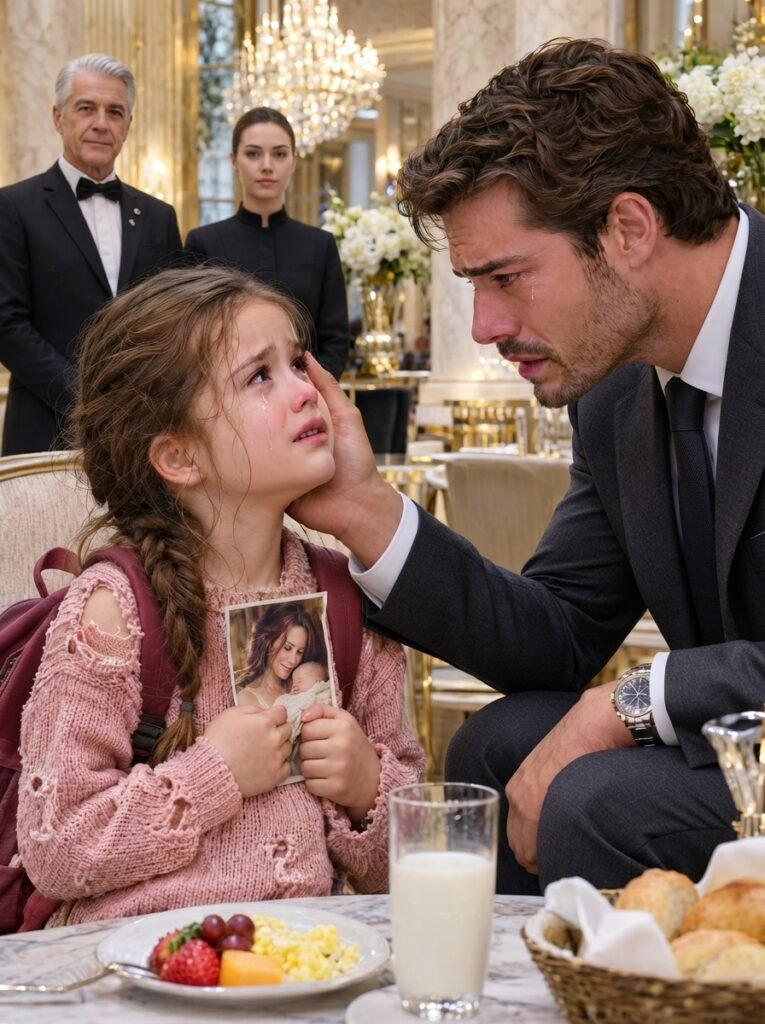
On a particularly cold November morning in Portland, Maine, forty-five-year-old Richard Bennett stepped out of his company’s flagship waterfront restaurant, thinking about a meeting that was scheduled for nine o’clock and wondering whether he would have enough time to review the financial reports waiting on his desk.
As the founder of a successful restaurant and catering company with establishments throughout New England, Richard had grown accustomed to a life in which nearly every hour was accounted for, and although he owned a beautiful house overlooking the ocean, employed hundreds of people, and had accumulated more wealth than he had ever imagined possible, there were evenings when he returned home and found the silence almost unbearable.
He had become remarkably good at keeping himself busy, which was perhaps why he had never given himself much opportunity to consider what was missing from his life.
That morning, however, something happened that would make every appointment on his calendar seem unimportant.
Near the side entrance of the restaurant, beneath an awning that offered little protection from the cold Atlantic wind, stood a small girl wearing an oversized brown coat, faded jeans, and a pair of sneakers that appeared to belong to someone several years older than she was. Her light brown hair had been gathered into an uneven ponytail, and she carried a worn purple backpack whose zipper had been repaired with a piece of string.
She was seven years old, although the seriousness in her expression made her seem considerably older.
Richard might have walked past her had she not taken a hesitant step forward and spoken in a voice so quiet that he almost missed it.
“Excuse me, sir. Do you have any bread you aren’t going to use?”
He stopped, looking first at the child and then around the sidewalk, expecting to see a parent or another adult nearby.
“Are you waiting for somebody, sweetheart?” he asked.
The little girl shook her head, tightening her fingers around the straps of her backpack.
“I just wondered if there was anything left over from breakfast. It doesn’t have to be fresh.”
Something about the careful politeness of her request troubled him, particularly the way she seemed prepared to apologize simply for being hungry.
“When was the last time you had something to eat?”
She thought for a moment before answering.
“Yesterday afternoon. A lady gave me some crackers.”
Richard turned toward his operations manager, who had followed him outside, and asked her to postpone his morning meeting before inviting the little girl into the restaurant.
The child hesitated at the entrance, looking down at her shoes and then at the polished wooden floors.
“Am I allowed to go inside looking like this?”
Richard felt an unexpected heaviness in his chest.
“Of course you are. Come on, let’s get you something warm.”
He led her to a quiet table near the fireplace, where a server brought scrambled eggs, buttered toast, sliced strawberries, and a mug of warm milk. Although the girl was clearly hungry, she ate with remarkable restraint, occasionally glancing at Richard as though she expected him to announce that she had taken too much.
When he offered her another piece of toast, she asked whether she could save it for later.
He assured her that she could have as much as she wanted, and for the first time that morning, he saw the beginning of a smile.
“What’s your name?” he asked.
“Abigail. My mommy used to call me Abby.”
“That’s a lovely name. Where’s your mommy now?”
The little girl’s smile disappeared, and she carefully placed her toast on the edge of her plate.
“She went away when I was little. A lady told me she wasn’t coming back.”
Richard regretted asking, but before he could change the subject, Abigail continued.
“Her name was Rebecca. She used to sing when she brushed my hair.”
The name brought back a collection of memories that Richard had spent years trying not to revisit, and although there were thousands of women named Rebecca, something about the child’s familiar gray-blue eyes suddenly made him uneasy.
The Woman He Had Never Forgotten
Nearly eight years earlier, when Richard was still struggling to establish his catering business, he had fallen deeply in love with a young elementary school teacher named Rebecca Sullivan.
They had met at a neighborhood fundraiser in Portsmouth, New Hampshire, where Richard had volunteered to provide the food and Rebecca had been helping organize activities for the children. She had possessed a wonderful sense of humor, an extraordinary patience with others, and a way of making even his most difficult days seem manageable.
In those years, Richard had worked long hours, often returning to his modest apartment with aching shoulders and barely enough energy to remove his shoes, yet Rebecca had never complained about his circumstances. She believed in what he was building, although she occasionally reminded him that success would mean very little if he forgot to enjoy the people with whom he hoped to share it.
For a while, they had spoken seriously about marriage, imagining a comfortable little house, Sunday breakfasts, and children who would grow up knowing they were loved.
Then Richard received an opportunity to expand his business into several Midwestern cities, an opportunity that required him to relocate to Chicago for an extended period.
He wanted Rebecca to accompany him, but her mother was experiencing serious health difficulties, and Rebecca could not bring herself to leave the woman who had raised her.
Their disagreements became increasingly painful, not because either of them had stopped caring, but because both believed the other should understand what mattered most.
During their final conversation, Richard had said things he would regret for years, while Rebecca, exhausted from trying to explain herself, had finally told him that perhaps they wanted different kinds of lives.
He left New Hampshire believing that she no longer wished to be part of his future.
What Richard never knew was that shortly after his departure, Rebecca discovered she was expecting a child.
She attempted to contact him repeatedly, sending letters to his new office and leaving messages with the executive assistant responsible for managing his correspondence. Richard received none of them, and as the months passed without an answer, Rebecca gradually accepted what she believed was his decision to remain absent from her life.
Years later, when Richard returned permanently to New England, he tried to locate her through mutual acquaintances, but the information he received was vague and discouraging. Someone mentioned that she had moved away, while another suggested that she might have started a family.
Unwilling to interfere with a life he imagined she had built without him, Richard eventually stopped searching.
Now, sitting across from a hungry little girl in his own restaurant, he found himself remembering details about Rebecca that he had not thought about in years.
“Abby, do you remember anything else about your mother?”
The child nodded.
“She had brown hair, and she used to make pancakes that looked like little bears. She said my daddy had a nice voice and that he could make people laugh.”
Richard’s hands grew cold despite the warmth of the fireplace.
Rebecca had often teased him about his deep voice, telling him that he sounded like someone who ought to be reading bedtime stories on the radio.
Still, he reminded himself that childhood memories could be incomplete and that his own longing might be encouraging him to see connections where none existed.
“Do you happen to have a picture of your mommy?”
Abigail reached into her coat pocket and removed a small photograph that had been folded so many times that the creases had begun to separate.
“I keep this one close to me because I don’t want to lose it.”
She handed it across the table.
Richard unfolded the photograph carefully, and the moment he saw the young woman sitting on a wooden park bench with a baby resting against her shoulder, he felt as though the room had suddenly grown smaller.
There was no possibility of mistaking her.
The woman was Rebecca.
Her familiar smile, the slight dimple in her left cheek, and the little silver necklace he had given her on her twenty-sixth birthday were all there.
With trembling fingers, Richard turned the photograph over.
On the back, in handwriting he recognized immediately, were several words written in faded blue ink.
For my precious Abigail. Your father’s name is Richard Bennett. I hope someday you will have the chance to know him.
For several moments, Richard could neither speak nor move, and when Abigail noticed the tears gathering in his eyes, she looked genuinely concerned.
“Did I do something wrong, sir?”
He shook his head, slid out of his chair, and lowered himself onto one knee beside her so that she would not have to look up at him.
“No, sweetheart. You haven’t done anything wrong at all.”
He wanted desperately to embrace her, but he understood that he was still a stranger in her eyes, and whatever the photograph appeared to suggest, he needed to establish the truth before making promises that might change her life.
“Abby, can you tell me where you’re staying?”
She looked toward the window.
“Different places. Sometimes there’s a shelter, but sometimes there isn’t enough room.”
Richard swallowed with difficulty.
“And who takes care of you?”
The child lowered her eyes.
“Mostly me.”
Of everything Richard had heard that morning, those two words were the ones that would remain with him longest.
Richard arranged for a private office to be made available while his operations manager contacted the appropriate child protection services, and he remained nearby until a social worker named Patricia arrived.
Although every instinct urged him to take Abigail home immediately, he understood that a child who had experienced instability needed more than an emotional promise from a wealthy stranger, even if that stranger might be her father.
Patricia spoke gently with Abigail, allowing her to explain her circumstances at her own pace, while arrangements were made for clean clothing, a medical evaluation, and temporary protective care.
Over the following days, Richard’s attorney and a licensed investigator began reconstructing Rebecca’s life after their separation.
What they discovered left Richard struggling to reconcile the comfortable years he had enjoyed with the difficulties Rebecca and their possible daughter had endured.
Rebecca had given birth to Abigail in a small New Hampshire hospital, supporting herself through part-time teaching and tutoring while caring for her mother. After her mother’s passing, Rebecca had moved to a less expensive apartment and continued raising Abigail on her own.
When Abigail was approximately two years old, Rebecca developed a serious medical condition that progressed before she was able to receive adequate treatment.
She passed away several months later.
Richard sat in his study for a long time after receiving that information, remembering the woman who had once packed sandwiches for his business trips and left encouraging notes inside his briefcase, unable to comprehend that she had faced such a difficult period without him.
Abigail’s birth certificate identified Rebecca as her mother, but the space reserved for her father’s information had been left blank.
Following Rebecca’s passing, Abigail had been placed informally with a woman named Lorraine Mercer, an acquaintance who had offered to care for her while longer-term arrangements were being considered.
Unfortunately, those arrangements had never been properly completed.
Lorraine had received financial assistance intended to support Abigail, yet interviews with former neighbors suggested that much of the assistance had not been used for the child’s benefit. Abigail had been expected to perform household chores beyond what was appropriate for her age, and she had sometimes gone without adequate meals.
Eventually, she had left the house, relying on occasional kindness from strangers and moving between temporary places of shelter.
Richard was deeply troubled by the information, but Patricia reminded him that Abigail’s immediate emotional and physical well-being needed to remain the priority while the authorities examined the circumstances surrounding her previous care.
He agreed completely.
“I don’t want anybody taking shortcuts because of who I am or how much money I have,” he told Patricia. “I want whatever happens next to be right for her.”
With the necessary authorizations, arrangements were made for a genetic paternity test, and Richard was permitted to visit Abigail at the child protection center while they awaited the results.
During one of those visits, he found her sitting at a small table with a collection of colored pencils, drawing a white house with blue shutters and an enormous maple tree in the front yard.
“That looks like a wonderful place to live,” he remarked, pulling up a chair.
Abigail continued coloring the roof.
“It’s a special house.”
“What makes it special?”
She considered the question carefully.
“Nobody has to leave when it gets dark, and nobody gets told there’s not enough room.”
Richard looked at the three figures she had drawn beneath the maple tree.
“Who are those people?”
“A mommy, a daddy, and their little girl.”
She paused before adding a small yellow sun in the corner of the page.
“They all get to stay together.”
Richard had spent much of his adult life negotiating contracts worth millions of dollars, yet he could not think of a single thing to say that would adequately respond to the innocent wish of the child sitting beside him.
Instead, he stayed and colored with her until visiting hours ended.
The Question He Had No Answer For
The paternity results arrived the following week, confirming a probability of fatherhood greater than 99.99 percent.
Richard read the report repeatedly, although the conclusion was unmistakable, and when he finally placed the papers on his desk, he covered his face with his hands and allowed himself to cry.
He was a father.
For seven years, he had been a father without knowing it, and while he had celebrated business milestones, traveled across the country, and purchased a house large enough to accommodate a family he did not have, his daughter had been growing up without the security he could easily have provided.
He thought about her first birthday, her first steps, the first time she had learned to write her name, and all the ordinary childhood moments that had taken place without him.
More painful still was the knowledge that Rebecca had once carried the responsibility of raising their child alone while believing he had chosen not to respond.
The following afternoon, accompanied by Patricia, Richard visited Abigail to explain the results in a way she could understand.
She greeted him enthusiastically and showed him another drawing, this time depicting a tall man holding the hand of a little girl.
“That’s you and me,” she explained proudly.
Richard smiled, although he could feel his emotions beginning to overwhelm him.
“Abby, do you remember when we went to see the doctor and they took those little samples from inside our cheeks?”
She nodded.
“Well, we got the results, and they told us something very important. Your mommy was right about the name she wrote on your picture.”
Abigail studied his face.
“What do you mean?”
Richard reached for her small hand.
“I’m your father, sweetheart. I’m really your daddy.”
For several seconds, Abigail remained perfectly still, as though she needed time to understand the meaning of what she had heard.
Then she asked the question Richard had been preparing himself for, although no amount of preparation could have made it easier.
“How come you didn’t come and get me before?”
He took a slow breath.
“Because I didn’t know you were here. Your mommy and I lost touch before you were born, and I didn’t know she was going to have a little girl. I wish I had looked harder for her, and I wish more than anything that I could have found you sooner.”
Abigail looked down at their hands.
“Did you know I didn’t have anybody?”
“No, honey. I promise you, if I had known, I would have come looking for you.”
She remained quiet for a moment, and then, with the uncertainty of a child who had learned to ask permission for even the smallest expressions of affection, she whispered:
“Can I give you a hug?”
Richard opened his arms, and Abigail leaned against him, wrapping her little hands around his shoulders.
He held her gently, feeling the weight of everything they had missed and everything they might still have together.
After a while, she pulled back just enough to look at him.
“Does this mean I can call you Daddy?”
Richard nodded, unable to trust his voice immediately.
“I’d love that more than anything in the world.”
Abigail rested her head against his chest again, and Richard realized that no professional accomplishment had ever brought him the happiness contained in that single question.
While Richard was beginning to establish a relationship with his daughter, his investigator uncovered information that finally explained why Rebecca’s attempts to contact him had been unsuccessful.
His former executive assistant, Judith Palmer, had managed both his business and personal correspondence during the early years of his expansion into Chicago.
Several archived records indicated that letters from Rebecca had been received at the office but had never been forwarded to Richard.
When confronted with the evidence, Judith eventually acknowledged that she had deliberately withheld the correspondence, believing that Richard’s relationship with Rebecca would interfere with his professional ambitions.
At the time, she had convinced herself that she was protecting his future.
Richard listened to her explanation with a mixture of anger and disbelief, unable to understand how another person could have assumed the right to make such a profoundly personal decision on his behalf.
“You weren’t protecting my future,” he told her quietly. “You were making decisions about my family that were never yours to make.”
Judith attempted to apologize, but Richard found little comfort in her words.
He instructed his attorney to preserve the available evidence and determine what appropriate legal options existed, while the investigation into Lorraine’s handling of Abigail’s care continued through the relevant authorities.
Measures were also put in place to prevent Lorraine from having further unauthorized contact with the child.
Richard could not pretend that uncovering the truth brought him peace, because knowing exactly how those years had been taken from him did nothing to return them.
Nevertheless, he refused to allow his anger to become the central story of Abigail’s childhood.
She deserved a father who was emotionally present, not one who spent every waking hour dwelling on the people responsible for their separation.
One Sunday morning, Richard drove to a quiet cemetery in southern New Hampshire, carrying a bouquet of white roses and a copy of the photograph Abigail had shown him.
When he found Rebecca’s resting place, he stood silently for several minutes, remembering the young woman who had once believed that the two of them could build a beautiful life together.
Eventually, he knelt beside the flowers.
“I found our little girl, Rebecca,” he said softly. “She’s wonderful. She’s thoughtful and funny, and she has your eyes. I’m so sorry I wasn’t there when you needed me, but I’m going to spend the rest of my life making sure she knows how much she matters.”
He remained there until the afternoon sunlight began to fade, telling Rebecca about Abigail’s drawings, her fondness for strawberries, and the way she carefully saved pieces of toast.
Before leaving, he made one more promise.
Their daughter would grow up knowing her mother’s story, not merely the sorrowful circumstances of her absence, but the warmth, kindness, and courage that had made Rebecca the woman he had loved.
Learning What It Meant to Be a Father
Establishing paternity did not mean that Abigail could immediately move into Richard’s home, and over the following weeks, he cooperated with the required assessments, supervised visits, and gradual transition arrangements.
He also began preparing a bedroom for her, although he quickly discovered that what he considered an impressive child’s room was considerably different from what Abigail actually wanted.
When he showed her photographs of elaborate furniture and expensive decorations, she politely studied them before asking whether she could have a yellow bedspread instead.
“And maybe a little bookshelf,” she added. “And a table where I can draw pictures.”
Richard smiled.
“Anything else?”
She hesitated.
“Could we put Mommy’s picture somewhere?”
“Absolutely.”
“I don’t want to forget her just because I have a daddy now.”
Richard reached across the table and squeezed her hand.
“You never have to choose between loving your mommy and loving me. She’ll always belong in our family.”
As their visits became longer and more frequent, Richard discovered that fatherhood involved countless ordinary responsibilities for which his years of business experience had left him entirely unprepared.
He learned how to untangle Abigail’s hair without pulling it, how to prepare pancakes without burning the edges, and how to listen patiently while she explained the complicated relationships between the children in her classroom.
He rearranged his work schedule, delegated responsibilities he had previously insisted on handling himself, and began protecting their time together with the same determination he had once reserved for important business negotiations.
Yet Abigail’s adjustment was not always easy.
Sometimes she became anxious when Richard left the room without telling her where he was going, and on several occasions, he discovered crackers and wrapped pieces of bread hidden among her belongings.
A child psychologist explained that Abigail’s previous experiences had taught her to prepare for uncertainty, and that developing a sense of safety would require patience, predictable routines, and repeated reassurance.
Richard never scolded her for saving food.
Instead, he showed her where the snacks were kept and explained that she could always ask for something to eat, even if it was not mealtime.
Whenever he finished a visit, he told her when he would return, and he made certain that he kept his promise.
Gradually, Abigail began to understand that his words were dependable, and Richard began to understand that trust was not something a parent could demand simply because of a biological connection.
It was something he would have to earn through hundreds of ordinary moments.
The First Night She Felt at Home
Approximately a month after the paternity results were confirmed, Richard received authorization for Abigail to begin living with him under the established supervision and follow-up arrangements.
On the morning she arrived, he stood outside his house overlooking Casco Bay, feeling more nervous than he had ever felt before an important business meeting.
Abigail stepped out of Patricia’s car wearing a new lavender sweater and carrying the same worn purple backpack she had possessed on the day they met.
Richard offered to carry it for her, but she shook her head.
“I’d rather keep it with me.”
“That’s perfectly fine, sweetheart.”
Together, they walked through the front door, and Abigail looked around at the spacious living room, the wooden staircase, and the large windows overlooking the garden.
“Do you really live here all by yourself?”
Richard laughed gently.
“Not anymore.”
She smiled, and after exploring her bedroom, she asked whether she could invite a friend from the protection center to visit someday and whether she would still be able to attend school with the classmates she had recently grown attached to.
Richard assured her that becoming part of his family did not mean giving up every familiar person or place that had brought her comfort.
That evening, they prepared dinner together, and although Richard managed to overcook the grilled cheese sandwiches, Abigail laughed so enthusiastically that he decided imperfect dinners might become a family tradition.
Later, after helping her brush her teeth and reading two chapters from a children’s book, Richard tucked her beneath the yellow bedspread she had chosen herself.
A framed photograph of Rebecca stood on the bedside table.
As Richard prepared to turn off the lamp, Abigail reached for his sleeve.
“Daddy?”
“Yes, sweetheart?”
“Are you really going to be here tomorrow morning?”
Richard sat beside her and gently brushed a strand of hair away from her forehead.
“I’ll be downstairs making breakfast when you wake up, and tomorrow night, we’ll read another chapter of your book. This is your home now, Abby. You don’t have to wonder whether there’s going to be a place for you tomorrow.”
She considered his words for a long moment before looking toward the purple backpack resting against her pillow.
“Then I don’t have to sleep with my backpack on anymore?”
Richard felt his throat tighten.
Until that moment, he had not fully understood why she insisted on keeping the bag so close, even while sleeping.
It contained nearly everything she had been able to preserve from her earliest childhood, including her mother’s photograph, a small knitted cardigan, and a fabric bracelet bearing her name. Keeping it attached to her had been her way of making sure that wherever she found herself the following morning, those precious belongings would still be hers.
“No, honey,” he answered, kneeling beside the bed. “You can put it wherever you like. Nobody is going to take it away from you.”
Abigail slowly removed the backpack from beside her pillow and placed it on the floor next to her bed.
Then she reached for Richard’s hand.
“Good night, Daddy. I love you.”
He kissed her forehead.
“I love you too, sweetheart. More than you’ll ever know.”
Richard remained near the doorway until her breathing became slow and peaceful, watching the little girl who had entered his restaurant asking for a piece of leftover bread and had given him something infinitely more valuable than anything he had ever earned.
For years, he had believed that building a successful company would be the greatest accomplishment of his life, and he had measured his progress through new locations, financial reports, and increasingly ambitious plans.
Now, standing outside a small bedroom illuminated by a warm night-light, he understood that the most meaningful thing he would ever build could not be measured in money.
It would be built through Saturday morning pancakes, school pickups, bedtime stories, promises kept, and the quiet reassurance that someone would always be waiting when his daughter came home.
There would be difficult days ahead, and Richard knew that neither his love nor his resources could erase everything Abigail had experienced, but he could give her the patience and stability she needed to discover that her future did not have to resemble her past.
And beneath a cheerful yellow bedspread, with her mother’s photograph beside her and her backpack finally resting on the floor, a seven-year-old girl was beginning to understand something every child deserves to know.
She belonged somewhere.
She was wanted.
And when morning came, her daddy would still be there.