The wind at Fort Sam Houston that morning smelled like wet dirt and metal. Texas wind always feels personal to me, like it knows where the soft places are and goes straight for them. It slid under my collar, through the wool of my dress uniform, and across the back of my neck while I stood between two open graves.
I had spent fourteen years in the Army and knew how to keep my chin level when my knees wanted to give out. I knew how to lock my jaw and breathe on a count when my body was trying to revolt, but none of that training prepared me for this. Looking at those two caskets, I understood with awful precision that one held my husband, Terrence, and the other held my seven year old daughter, Mia.
Terrence’s casket was dark walnut with brass handles, while Mia’s was a small, haunting white. That specific detail of the color difference is still the one thing that ruins me every time I remember it.
The chaplain’s voice drifted in and out, sounding steady and kind against the backdrop of the gray morning. Somewhere to my left, somebody was crying into a tissue with that soft, embarrassed sound people make when they are trying not to be heard. The honor guard moved in clean, practiced lines with boots striking the dirt in a rhythmic, somber cadence.
Everything around me had structure, but inside of me, there was nothing but a deafening noise of grief. My commanding officer, General Vance, had come in person, along with half of my chain of command and the neighbors from our street. Even Mia’s second grade teacher was there, still wearing a cardigan with tiny embroidered ladybugs on the collar.
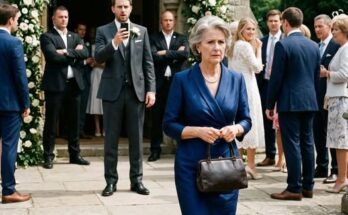
The three folding chairs reserved for my family remained painfully empty throughout the entire service. I kept glancing at them even when I hated myself for it, because those black metal frames looked too bare in the light. I had told myself there could be traffic from San Antonio or a rental car issue, clinging to those excuses because the alternative was too ugly to look at.
The rifles cracked in sequence and the sound punched through my rib cage with a violent force. Mia used to clap whenever fireworks started before burying her face in Terrence’s side, and for one insane second, I expected to find her there. Instead, there was only the flag folding, a crisp and exact ceremony that made a whole life look incredibly small.
When the sergeant major placed the flag in my hands, the cloth felt heavier than any material had any right to be. I heard the formal words about a grateful nation and honorable service, but all I could think about was that Terrence had never even served in uniform. He was a civilian architect who made pancakes shaped like stars and cried at sad movies, yet the Army was honoring him because he was mine.
My neighbor, Mrs. Gable, pressed a foil covered casserole dish into my hands after the service like it was a sacred relic. Mia’s teacher held both my wrists and told me, voice shaking, that my daughter had once spent a full recess explaining why kittens should be allowed to go to school. I laughed for a brief second and then immediately hated myself for finding a moment of humor in a graveyard.
General Vance stepped close enough that nobody else could hear us, his silver temples glinting in the dull light. “Captain Rossi,” he said quietly, “did your family make it in for the service?”