PART 2
I folded the ticket and put it in my pocket.
“Hey, Petey,” I said. “How about a brothers’ night tonight? Just you and me. Pizza and the Braves replay at my hotel.”
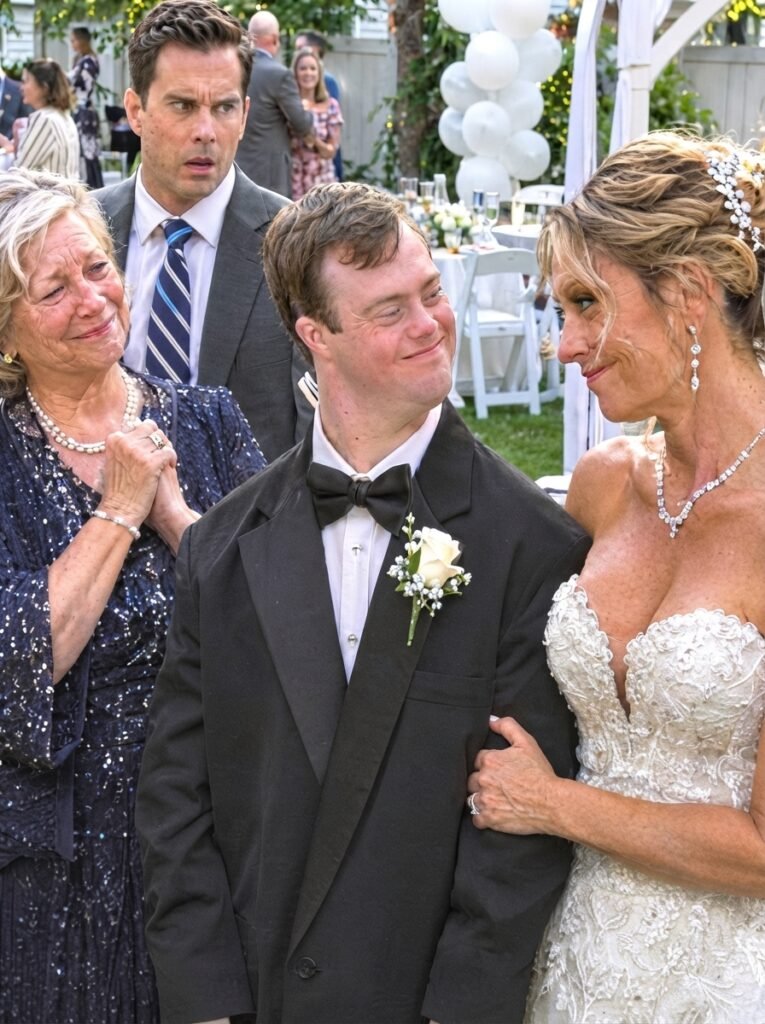
His face lit up. Then he looked at Rhiannon.
“No,” she snapped. “He’s my husband. He stays with me.”
“Petey can decide for himself,” I said. “That’s what you told me, right? He’s an adult.”
She didn’t have an answer for that in front of forty guests.
Petey picked pizza. Of course he did.
At the hotel, while he watched baseball, I called my father’s estate attorney, Mr. Whitcomb. Then I called the police.
By eight the next morning, Mr. Whitcomb had an emergency hearing in probate court. A judge reviewed the guardianship order and signed a temporary order. Petey could not leave the state. Any document he’d signed without his guardians’ approval was frozen.
Two detectives went to my mother’s house with a warrant for Rhiannon’s purse.
There were eleven documents inside.
A power of attorney giving Rhiannon control over Petey’s finances.
A new will leaving everything to “my beloved wife.”
A request to the trust to release $400,000 for “a home for the newlyweds.”
And an application for a life insurance policy on Petey. $750,000. Beneficiary: Rhiannon Tully.
The detectives ran her name.
She’d been married before.
In 2019, in Florida, to a 31-year-old man with an intellectual disability. He had a settlement from a car accident.
He drowned in Mexico. On their honeymoon. She came home alone and collected his life insurance.
Florida investigators had always had doubts. They’d never had enough to charge her.
Now they had a pattern.
Rhiannon and her brother were arrested at the Atlanta airport that afternoon, at the gate for Cancún. She was still wearing the diamond earrings she’d bought with my mother’s credit card.
They were charged with exploitation of a disabled adult, forgery, and attempted insurance fraud. Florida reopened the drowning case the following month.
The marriage was annulled within six weeks. A judge called it “void from the very first signature.”
My mother cried for days.
“I just wanted him to have what everyone else has,” she kept saying. “Somebody to love him.”
“He has that, Mom,” I said. “He’s always had that.”
The hardest part was Petey.
He didn’t understand at first. He kept asking when Rhiannon was coming back.
I sat with him on the porch and explained it the best way I could. That some people pretend to love you because they want something. That it wasn’t his fault. That he hadn’t done anything wrong.
He thought about it for a long time.
“Like a fake friend,” he said.
“Exactly like that.”
He nodded slowly.
“Then I’m glad you came, Cal.”
I didn’t go back to London.
I opened a small law practice in Savannah. I bought a house with a spare room.
Petey still calls me every Sunday at 4 p.m. sharp.
Even though now I’m sitting right next to him on the couch, watching the Braves.
THE END.